Ozempic and CKD: How to Eat When You Have Both
The FDA approved Ozempic (semaglutide) specifically to reduce the risk of worsening kidney disease and cardiovascular death in adults with Type 2 diabetes and CKD. This makes it the first GLP-1 medication with FDA approval for this specific indication. Ozempic is approved only for people who have both Type 2 diabetes AND CKD — it is added to existing treatment plans, not used as a replacement for ACE inhibitors, ARBs, SGLT2 inhibitors, or other kidney-protective medications.
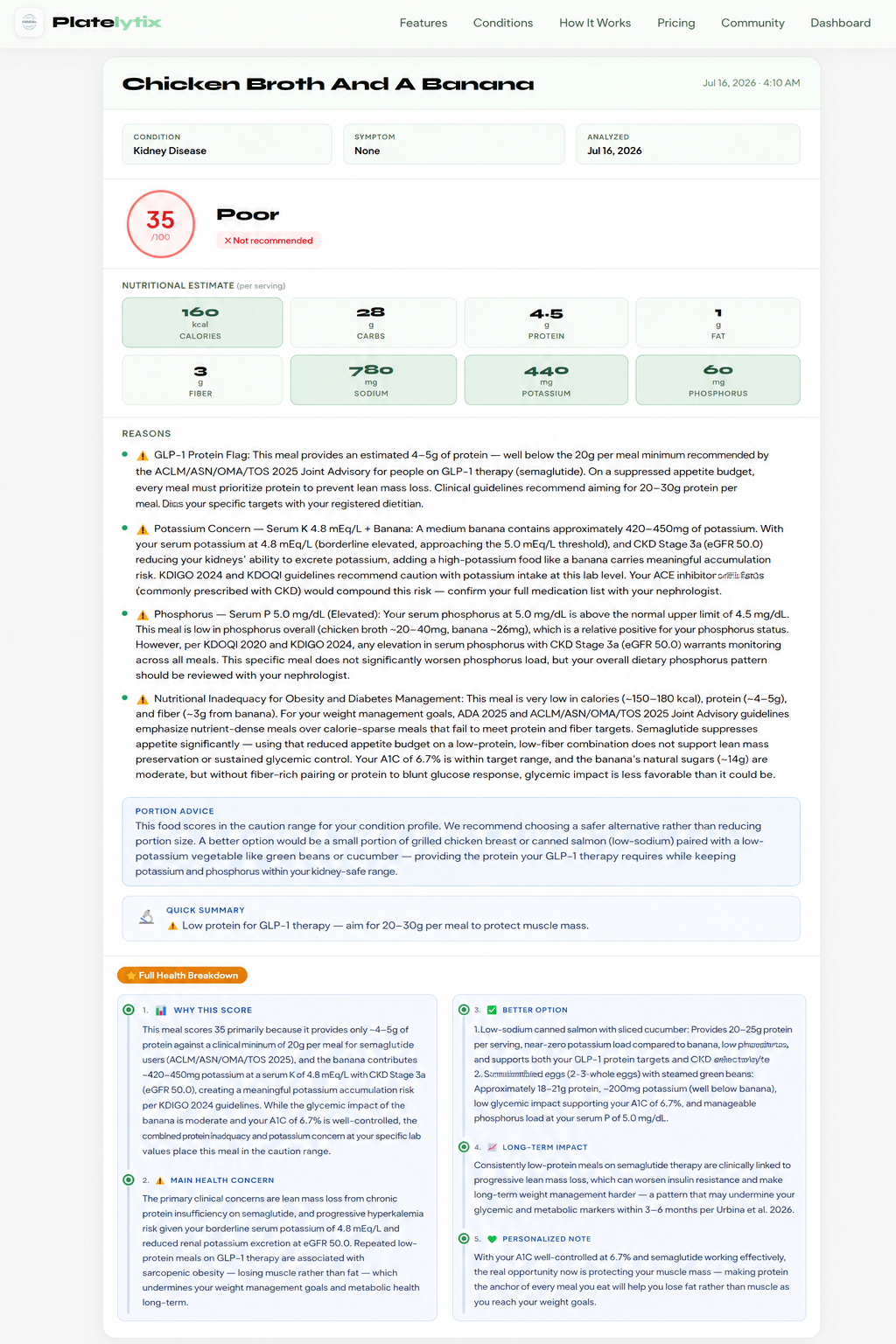
EATING WELL ON OZEMPIC WITH CKD
- High-quality, low-phosphorus protein: egg whites, fresh chicken (not processed), fresh fish — meet protein needs without excessive phosphorus load
- Small frequent meals: GLP-1 therapy suppresses appetite and CKD benefits from smaller potassium and phosphorus loads per meal — both conditions align on this point
- Low-potassium, nutrient-dense foods: green beans, cabbage, carrots, cucumber pack nutrition without potassium risk
- Vitamin D and calcium from food: Ozempic depletes both but CKD affects Vitamin D metabolism. Discuss supplementation with your nephrologist specifically
- Stay well hydrated: Ozempic can cause nausea, vomiting, and diarrhea, which leads to dehydration. In CKD patients, even mild dehydration can significantly worsen kidney function. Drink adequate fluid daily and contact your physician immediately if you experience persistent vomiting or diarrhea — this is a medical situation requiring prompt attention, not a wait-and-see one
THE FDA APPROVAL — WHAT IT MEANS FOR YOU
On January 28, 2025, the FDA approved Ozempic (semaglutide) as the first and only GLP-1 receptor agonist specifically approved to reduce the risk of worsening chronic kidney disease and cardiovascular death in adults with Type 2 diabetes and CKD. This approval was based on the results of the FLOW clinical trial, which was so significant it ended early to avoid disadvantaging participants who were receiving a placebo instead of the active medication.
This approval applies only to the injectable form of semaglutide (Ozempic). Oral semaglutide (Rybelsus) and other GLP-1 medications including liraglutide (Victoza) and dulaglutide (Trulicity) do not carry this specific FDA approval for the CKD indication. If you currently take a different GLP-1 medication and have CKD with Type 2 diabetes, discuss with your physician whether Ozempic specifically is appropriate for you.
WHAT THE FLOW TRIAL ACTUALLY SHOWED
The FLOW trial results that supported the FDA approval are specific and significant. Participants taking Ozempic were 24% less likely to experience a major kidney disease-related event compared to those on placebo. The specific outcomes included in this measurement were loss of 50% or more of kidney function, kidney failure, need for dialysis, need for kidney transplant, death from kidney disease, and death from cardiovascular disease. Beyond kidney outcomes, participants taking Ozempic also had a lower risk of major cardiovascular events including heart attack and stroke, and a lower risk of death from any cause. For CKD patients who already carry significantly elevated cardiovascular risk, the combined kidney and heart protection in a single medication is clinically meaningful.
HOW OZEMPIC ACTUALLY PROTECTS THE KIDNEYS
Ozempic protects the kidneys through multiple mechanisms simultaneously, not just through blood sugar control. Lowering blood glucose reduces the amount of sugar that filters through the kidneys, which reduces damage to the glomerular filtration barrier over time. Lowering blood pressure reduces the mechanical stress on those same filters. Beyond these effects, researchers have identified additional kidney-specific mechanisms including reducing inflammation in kidney blood vessels, reducing the buildup of scar tissue in the kidneys, and removing excess sodium through the urine. This combination of metabolic, hemodynamic, and anti-inflammatory effects explains why the kidney benefit in the FLOW trial was significant even beyond what blood sugar control alone would predict.
WHO QUALIFIES FOR OZEMPIC FOR CKD
The FDA approval is specifically for adults who have both Type 2 diabetes AND CKD (both diagnoses are required). You cannot access this approval for CKD alone without Type 2 diabetes and you cannot access it for Type 2 diabetes alone without CKD. People who are likely to benefit most are those with early-stage CKD (Stages 1-3) who have elevated cardiovascular risk, and those who struggle to control blood sugar levels despite existing medications. If you have both conditions, discuss with your physician whether Ozempic is appropriate given your CKD stage, current medication list, and blood sugar control.
OZEMPIC IS AN ADD-ON, NOT A REPLACEMENT
This is one of the most important practical points about GLP-1 therapy in CKD: Ozempic is designed to complement existing kidney-protective and diabetes medications, not replace them. Most patients prescribed Ozempic for CKD and Type 2 diabetes will continue taking their ACE inhibitor or ARB for blood pressure and kidney protection, Metformin for blood sugar control if their eGFR permits, SGLT2 inhibitors such as Jardiance which also carry kidney and cardiovascular protection, and finerenone if prescribed. Starting Ozempic does not mean you should stop or reduce these other medications without explicit physician direction. Keep a current list of all medications, doses, and frequency and review it at every appointment to manage potential interactions.
HOW MUCH PROTEIN SHOULD I EAT ON OZEMPIC WITH CKD?
This is one of the most complex questions in CKD-GLP-1 nutrition. KDIGO 2024 recommends 0.8g/kg/day as an upper limit for CKD G3-G5, while ACLM/ASN 2025 recommends at least 0.8g/kg/day on GLP-1 therapy to prevent muscle loss, meaning for most patients both guidelines align at approximately 0.8g/kg/day. The concern arises if GLP-1 guidelines push toward 1.0-1.3g/kg which may exceed safe CKD protein limits depending on your GFR. Your nephrologist and prescribing physician should coordinate protein targets specifically for your CKD stage and GLP-1 dose.
CAN I TAKE OZEMPIC IF I HAVE CKD?
Yes. As of January 2025, if you have both Type 2 diabetes and CKD, your physician now has an FDA-approved indication specifically supporting its use. Semaglutide has demonstrated kidney-protective effects in the FLOW trial showing 24% reduction in major kidney disease-related events. Dose adjustments may be needed depending on CKD stage, and the nutritional stakes of every bite increase significantly when appetite is suppressed by GLP-1 therapy alongside kidney-related dietary restrictions. Coordinated care between nephrology and your prescribing physician is essential.
WHAT TO AVOID WITH BOTH OZEMPIC AND CKD
- High-fat meals: trigger nausea on Ozempic AND add cardiovascular risk in CKD
- Phosphate additives in processed food: particularly dangerous in CKD needless to say GLP-1 suppresses appetite; thus, making nutrient displacement from processed food even more costly
- High-potassium foods if serum K is elevated: bananas, oranges, avocado, potatoes — standard CKD restriction applies regardless of Ozempic
- Protein shakes and supplements: often high in phosphorus, potassium, and protein — check labels carefully against your CKD targets
- Dehydrating behaviors: alcohol, excessive caffeine, inadequate fluid intake compound the dehydration risk from GLP-1 side effects in a CKD patient
- NSAIDs: ibuprofen and naproxen are contraindicated in CKD and further reduce kidney blood flow. Never use for GLP-1 related nausea or discomfort
DOES OZEMPIC CAUSE NUTRIENT DEFICIENCIES WITH CKD?
Yes. Ozempic is associated with deficiencies in Vitamin D, Iron, Calcium, B12, and Thiamine, and CKD independently affects Vitamin D metabolism and iron absorption, creating compounded deficiency risk for patients managing both conditions simultaneously. Vitamin D supplementation in CKD requires physician oversight as activated Vitamin D metabolism is impaired. Discuss a full micronutrient panel with your nephrologist rather than self-supplementing.
THE PROTEIN CONFLICT — EXPLAINED
ACLM/ASN/OMA/TOS 2025 recommends minimum 0.8g/kg/day protein on GLP-1 therapy, ideally 1.0-1.3g/kg/day to prevent muscle loss. KDIGO 2024 recommends 0.8g/kg/day for CKD G3-G5 as an upper limit. For many patients, these targets align — both point to approximately 0.8g/kg/day. The concern arises if GLP-1 guidelines push toward 1.0-1.3g/kg which may exceed safe CKD protein limits.
Your nephrologist and endocrinologist or prescribing physician should coordinate protein targets specifically for your CKD stage and GLP-1 dose. This is not a decision to make based on general guidelines alone.
The Protein Conflict — Explained
ACLM/ASN/OMA/TOS 2025 recommends minimum 0.8g/kg/day protein on GLP-1 therapy, ideally 1.0–1.3g/kg/day to prevent muscle loss. KDIGO 2024 recommends 0.8g/kg/day for CKD G3–G5 as an upper limit. For many patients, these targets align — both point to approximately 0.8g/kg/day. The concern arises if GLP-1 guidelines push toward 1.0–1.3g/kg which may exceed safe CKD protein limits.
Your nephrologist and endocrinologist or prescribing physician should coordinate protein targets specifically for your CKD stage and GLP-1 dose. This is not a decision to make based on general guidelines alone.