Hypothyroidism Diet: What to Eat and Avoid
What to Eat with Hypothyroidism
- Selenium-rich foods: Brazil nuts (1–2 per day), tuna, sardines, eggs, sunflower seeds — selenium is essential for thyroid hormone conversion from T4 to T3
- Iodine-containing foods in moderation: seafood, dairy, iodized salt — iodine is required for thyroid hormone synthesis, but excess can worsen function
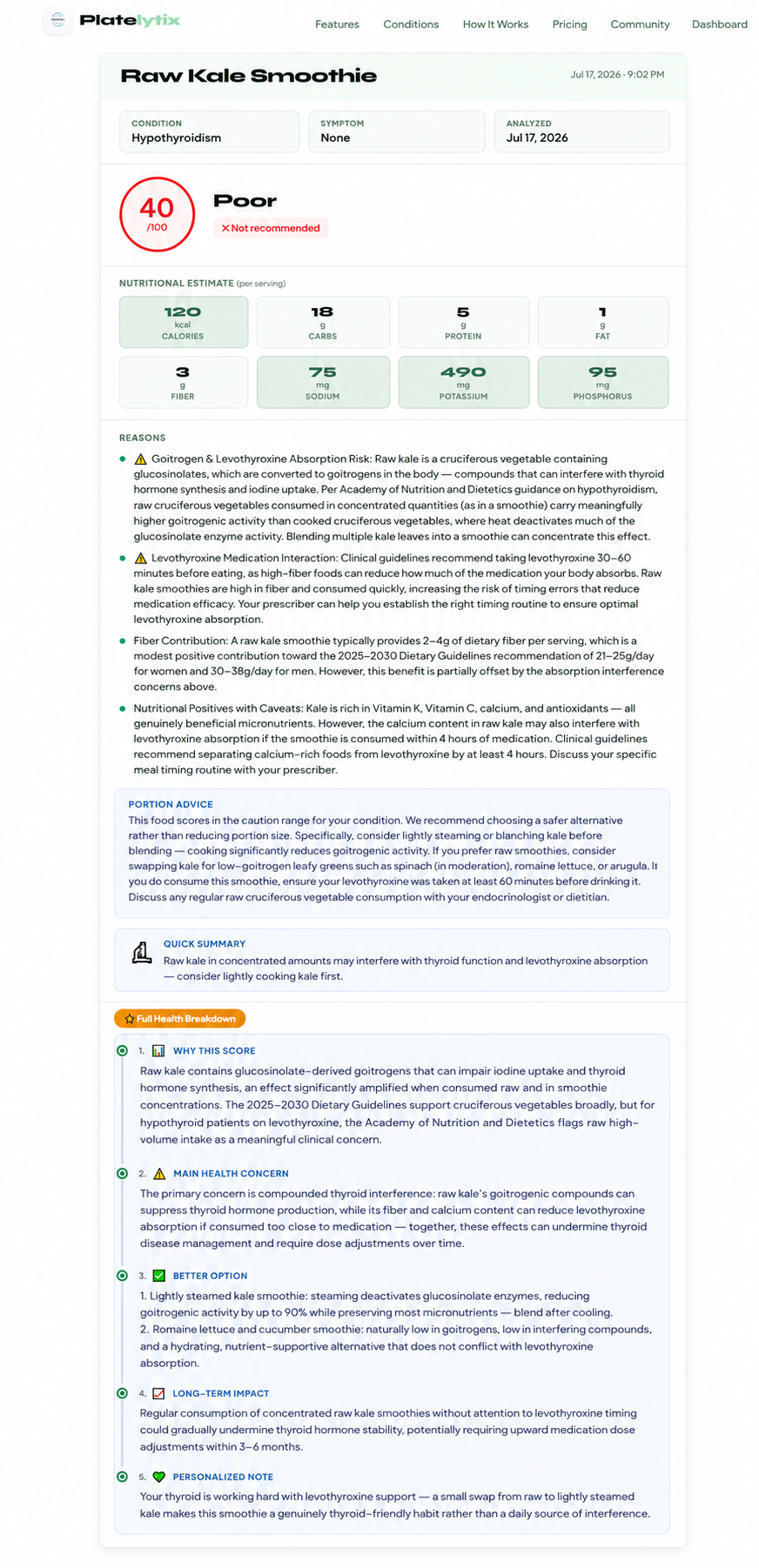
- Cooked cruciferous vegetables: broccoli, kale, cabbage, cauliflower — cooking significantly reduces goitrogenic compounds. Raw in large amounts is the concern, not cooked
- Zinc-rich foods: beef, pumpkin seeds, chickpeas — zinc supports thyroid hormone production
- Iron-rich foods: red meat, lentils, spinach — iron deficiency impairs thyroid function
How long after taking levothyroxine can I drink coffee?
Wait at least 30-60 minutes after taking levothyroxine before drinking coffee — even black coffee reduces levothyroxine absorption by up to 30% by affecting absorption in the gut. Some patients take levothyroxine at bedtime at least 3 hours after their last meal to avoid this interaction entirely — discuss this option with your physician if morning timing is consistently difficult.
Do goitrogens in broccoli affect hypothyroidism?
Cooked broccoli is safe for most hypothyroid patients — cooking significantly reduces goitrogenic compounds that can interfere with thyroid hormone production. The concern applies primarily to very large amounts of raw cruciferous vegetables consumed daily, such as large raw kale smoothies — a normal serving of cooked broccoli or cauliflower is not clinically significant for most people with hypothyroidism.
Can I eat eggs with hypothyroidism?
Yes — eggs are an excellent food for hypothyroidism, providing selenium (essential for T4 to T3 thyroid hormone conversion), iodine, and protein with no goitrogenic compounds. The only timing consideration is that eggs consumed within 30-60 minutes of levothyroxine may reduce absorption — wait the recommended window before eating.
What to Limit with Hypothyroidism
- Raw cruciferous vegetables in very large amounts: large daily raw kale smoothies or raw cabbage salads contain goitrogens that can interfere with iodine uptake — cooking neutralizes most of this effect
- Excess iodine: seaweed, kelp supplements, very high iodine intake can actually worsen thyroid function — balance matters
- Soy within 4 hours of levothyroxine: soy isoflavones interfere with medication absorption — not a reason to avoid soy entirely, just time it appropriately
- Gluten (for Hashimoto's patients): Hashimoto's has a documented association with celiac disease — discuss gluten sensitivity testing with your physician
Does soy affect thyroid medication?
Soy isoflavones interfere with levothyroxine absorption when consumed close to the medication — soy milk, tofu, edamame, and soy protein should be eaten well after taking your medication, at least 3-4 hours apart. This is a timing issue rather than a reason to avoid soy entirely — if you consume soy regularly, tell your physician so your dose can be calibrated accordingly.
Levothyroxine Timing — The Most Important Dietary Rule
If you take levothyroxine, the most clinically significant dietary factor is timing. Take your medication 30–60 minutes before eating. Coffee, calcium, soy, high-fiber foods, and iron supplements all reduce absorption when taken close to the medication. This single timing rule has more impact on thyroid hormone levels than any specific food restriction.