High Cholesterol Diet: What to Eat and Avoid
Foods That Lower Cholesterol
- Soluble fiber foods: oats, barley, lentils, beans, apples, psyllium — soluble fiber binds bile acids in the gut, forcing the liver to use LDL cholesterol to make more. Each 5–10g of additional soluble fiber reduces LDL by approximately 5%
- Fatty fish twice a week: salmon, mackerel, sardines — omega-3s reduce triglycerides significantly
- Plant sterols and stanols: fortified margarines, some orange juice — block cholesterol absorption in the gut
- Nuts: walnuts, almonds, pistachios — replace saturated fat snacks, associated with LDL reduction
- Olive oil: replace butter and saturated fats with olive oil — monounsaturated fat improves LDL without lowering HDL
What foods actively lower LDL cholesterol?
Foods that actively lower LDL include oats and barley (beta-glucan soluble fiber), legumes, apples, fatty fish, plant sterols in fortified foods, and nuts — each 5-10g of additional soluble fiber per day reduces LDL by approximately 5%. These work alongside statins rather than as alternatives — the combination of dietary change and medication produces greater LDL reduction than either alone.
How much can diet lower cholesterol without medication?
Diet can reduce LDL cholesterol by 20-30% without medication in adherent patients through reducing saturated fat, increasing soluble fiber, eliminating trans fats, and adding plant sterols. AHA and ACC guidelines emphasize these dietary changes as essential regardless of whether medication is also prescribed — they compound statin effectiveness significantly.
Is olive oil good for high cholesterol?
Yes — olive oil is one of the most evidence-supported foods for cardiovascular health, as its monounsaturated fat content improves LDL particle quality without lowering HDL. AHA 2026 recommends replacing saturated fats like butter and tropical oils with unsaturated fats like olive oil as one of the highest-impact dietary changes for LDL management.
Foods That Raise Cholesterol
- Saturated fats: the primary dietary driver of LDL — red meat daily, full-fat dairy, butter, coconut oil, palm oil. AHA recommends under 10% of daily calories from saturated fat
- Trans fats: partially hydrogenated oils — AHA recommends elimination. Check ingredient labels for "partially hydrogenated"
- Ultra-processed foods: high in both saturated fats and refined carbohydrates that raise triglycerides
- Added sugar: raises triglycerides and lowers HDL
Can I eat eggs with high cholesterol?
Current AHA guidance considers up to 1 egg per day acceptable for most people with high cholesterol, as dietary cholesterol from eggs has less LDL impact than saturated fat. The preparation matters more than the egg itself — eggs cooked in butter with bacon raise cholesterol significantly more than eggs cooked in olive oil with vegetables.
Statin Medication and Diet
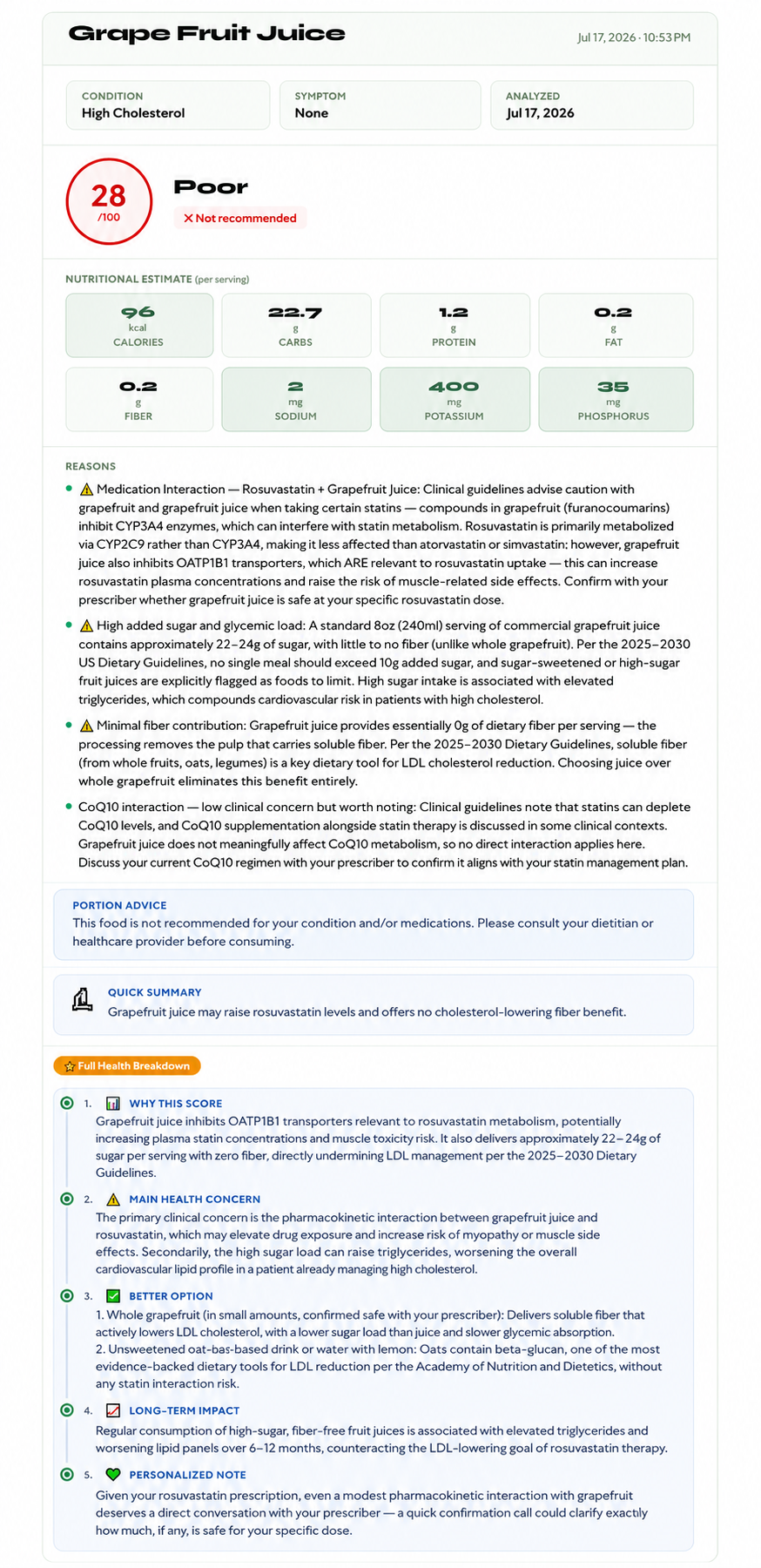
If you take a statin (Atorvastatin, Simvastatin, Rosuvastatin), diet and medication work synergistically — not as alternatives. Avoiding grapefruit is essential with atorvastatin and simvastatin (CYP3A4 interaction). Dietary cholesterol from eggs has less impact on LDL than saturated fat — the eggs themselves matter less than what you eat them with. CoQ10 depletion by statins is documented — discuss supplementation with your physician if you experience muscle symptoms.