Heart Disease Diet: What to Eat and Avoid
What to Eat with Heart Disease
- Fatty fish twice a week: salmon, mackerel, sardines, herring — omega-3s reduce triglycerides and inflammation
- Vegetables and fruits: aim for 4–5 servings each per day — antioxidants, potassium, and fiber all support cardiovascular health
- Whole grains: oats, quinoa, brown rice, whole wheat — soluble fiber lowers LDL cholesterol
- Olive oil over saturated fats: monounsaturated fats in olive oil improve LDL without raising HDL
- Legumes: beans, lentils, chickpeas — high soluble fiber, plant protein, low glycemic index
- Nuts in moderation: walnuts, almonds — healthy fats and fiber, associated with reduced cardiovascular events
What is the best diet for heart disease?
AHA 2026 guidelines support both the Mediterranean and DASH dietary patterns for cardiovascular disease management, with clinical trials showing 20-30% reduction in major cardiovascular events with consistent adherence. Both emphasize vegetables, fruits, whole grains, lean proteins, and healthy fats while limiting saturated fat, sodium, and added sugar — the pattern matters more than any individual food.
Can I eat eggs with heart disease?
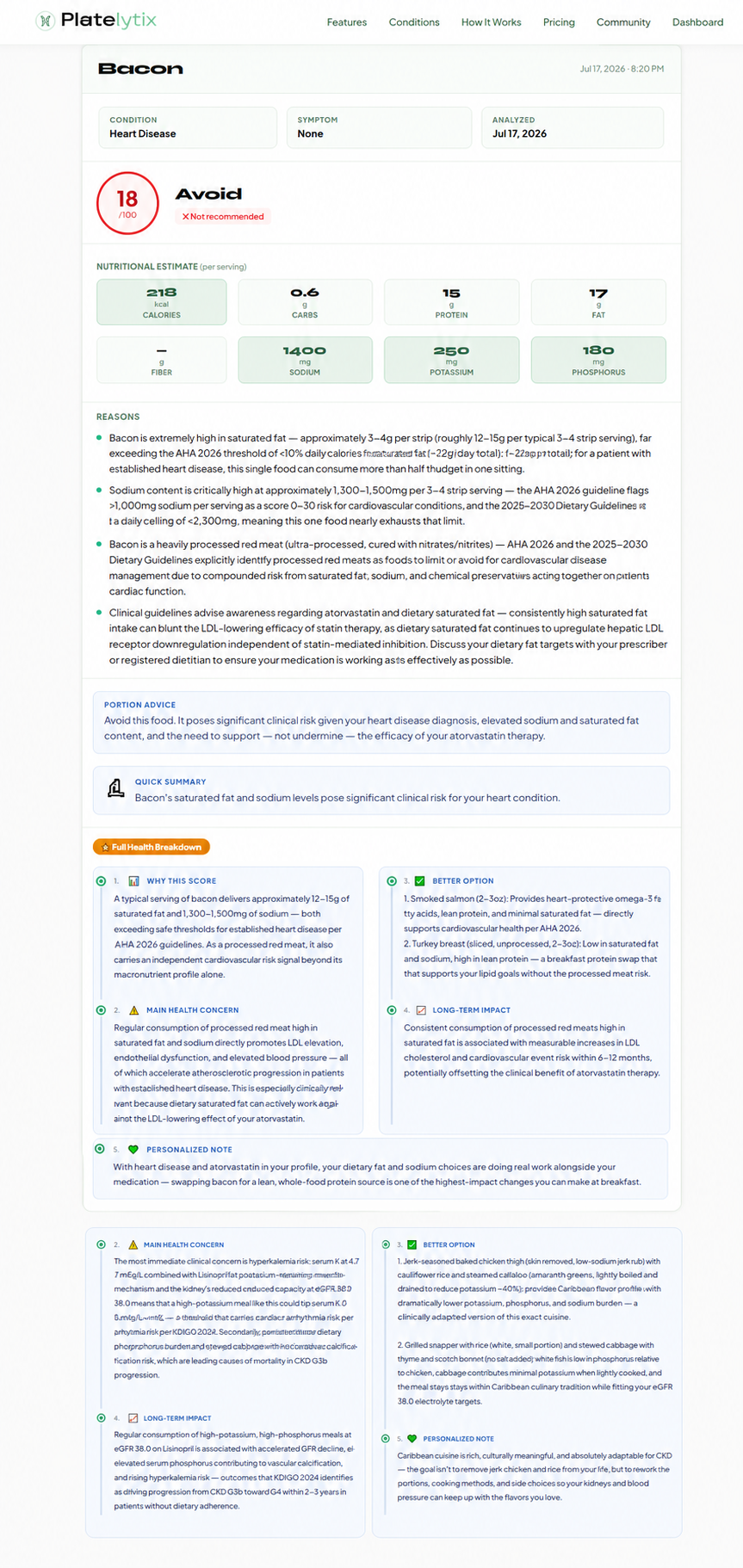
Current AHA guidance considers up to 1 egg per day acceptable for most people with heart disease, as dietary cholesterol from eggs has less impact on LDL than saturated fat. The concern is more about what you eat with eggs — bacon, sausage, and butter add significant saturated fat that directly raises LDL cholesterol.
What fish is best for heart disease?
Fatty fish highest in omega-3s are most beneficial for cardiovascular health — salmon, mackerel, sardines, herring, and anchovies are the top choices, with AHA recommending at least two servings per week. Omega-3s reduce triglycerides, lower inflammation, and are associated with reduced cardiovascular mortality in clinical trials.
BUILDING A HEART HEALTHY PLATE
A simple way to structure meals is to fill half your plate with vegetables or salad, a quarter with protein foods about the size of the palm of your hand, and a quarter with carbohydrate foods like whole grains, brown rice, or potatoes. This visual approach works across the Mediterranean and DASH patterns without needing to count exact grams at every meal.
UNDERSTANDING PORTION SIZES
A serving of meat, fish, or chicken is about 2 to 3 ounces, roughly the size and thickness of a deck of cards. A serving of pasta or rice is about one third to one half cup, about the size of a hockey puck. Using a smaller plate or bowl can also help manage portions naturally without needing to measure everything.
WHY LEAFY GREENS SPECIFICALLY HELP BLOOD PRESSURE
Leafy greens like spinach, kale, and bok choy are rich in dietary nitrates, which help relax and widen blood vessels, supporting healthier blood pressure. Research has found that people who eat the most nitrate rich vegetables, especially leafy greens, have a meaningfully lower risk of cardiovascular disease compared to those who eat the least.
PROCESSED FOOD IS NOT THE SAME AS ULTRA-PROCESSED FOOD
Not all processed food needs to be avoided. Minimally processed foods like fresh produce, milk, and eggs are close to their natural state. Processed foods like canned beans, jam, or plain yogurt combine natural ingredients in ways similar to home cooking and can be part of a heart healthy diet. Ultra-processed foods, containing ingredients rarely found in a home kitchen like preservatives and artificial colors, are the category most worth limiting, since they tend to be higher in added sugar, sodium, and unhealthy fats.
STAYING ACTIVE SUPPORTS YOUR HEART TOO
Diet works together with physical activity to reduce cardiovascular risk. Aim for about 150 minutes, or 2 hours and 30 minutes of moderate intensity activity per week, such as brisk walking or cycling. Combining regular movement with heart healthy eating produces better outcomes than either change alone.
CHOOSING LOWER MERCURY FISH
While fatty fish is one of the best choices for heart health, pregnant people, those breastfeeding, and young children should avoid high mercury fish such as shark, swordfish, king mackerel, and marlin. Salmon, sardines, and light canned tuna remain good lower mercury choices for everyone.
What to Avoid with Heart Disease
- Saturated fats: red meat daily, full-fat dairy, tropical oils (coconut, palm) — raise LDL cholesterol
- Trans fats: partially hydrogenated oils in some packaged foods — AHA recommends elimination
- High-sodium foods: processed meats, canned soups, fast food — AHA 2026 recommends under 2,300mg/day
- Added sugar and sugar-sweetened beverages: raise triglycerides and contribute to metabolic dysfunction
- Ultra-processed foods: AHA 2026 specifically calls out ultra-processed foods as a category to minimize
How much sodium per day with heart disease?
AHA 2026 recommends under 2,300mg of sodium per day for people with cardiovascular disease, with lower targets of 1,500-2,000mg for those with heart failure depending on fluid retention status. Most sodium in the American diet comes from processed and restaurant foods — switching to home-cooked meals with fresh ingredients is the single most effective dietary strategy for sodium reduction.
SPECIFIC ALCOHOL LIMITS
If you drink alcohol, moderate intake means no more than one drink per day for women and no more than two drinks per day for men. One drink equals 12 ounces of beer, 5 ounces of wine, or 1.5 ounces of distilled spirits. If you don't currently drink, the AHA does not recommend starting for heart health benefits.
SMOKING AND TOBACCO USE
Cigarette smoking significantly increases your risk for heart disease. If you smoke, quitting is one of the most effective steps you can take to lower your cardiovascular risk, alongside dietary changes.
SALT SUBSTITUTES REQUIRE CAUTION WITH CERTAIN MEDICATIONS
Many salt substitutes contain potassium chloride in place of sodium. If you take a potassium-sparing diuretic such as spironolactone, an ACE inhibitor, an ARB, or if you have kidney problems, these substitutes can raise potassium to dangerous levels. Check with your doctor before using any salt substitute, and note that not all are potassium-based; some, like Mrs. Dash, don't contain potassium and are generally fine.
UNMANAGED STRESS
Chronic stress can put extra strain on the heart and contribute to behaviors that work against heart healthy eating. Managing stress through adequate sleep, physical activity, or relaxation techniques is a meaningful complement to dietary changes, not a separate, unrelated concern.
Medication Interactions for Heart Disease
Statins (Atorvastatin, Simvastatin, Rosuvastatin) — avoid grapefruit with atorvastatin and simvastatin. Warfarin — maintain consistent Vitamin K intake. Beta blockers (Metoprolol, Carvedilol) — take with food to improve absorption and reduce nausea. ACE inhibitors — monitor potassium from food and salt substitutes. Digoxin — high-fiber meals can reduce absorption; take at consistent times relative to meals.