GERD Diet: Foods to Eat and Avoid for Acid Reflux
Common GERD Symptoms
GERD can show up differently from person to person. The classic symptoms are heartburn and regurgitation (a sour or bitter taste from stomach contents backing up into the throat or mouth). Other common symptoms include bloating, burping, and hiccups. Some people also experience atypical symptoms instead of, or alongside, heartburn — things like a dry cough, sore throat, difficulty swallowing, or a lump-in-the-throat sensation. This pattern, where reflux irritates the throat or airway without much classic heartburn, is sometimes called “silent GERD.” This section is meant to help you recognize common patterns, not to diagnose — if any of these symptoms are new, frequent, or concerning, talk to your doctor, and see the warning signs further down this page that need prompt medical attention.
Foods Safe for GERD
- Non-acidic vegetables: broccoli, green beans, carrots, peas, asparagus — low acid, GERD-friendly
- Lean proteins: chicken breast (baked/grilled), fish, egg whites, tofu — low fat, less likely to relax the lower esophageal sphincter
- Oatmeal: absorbs stomach acid, high fiber, filling without triggering reflux
- Ginger: natural anti-inflammatory, supports gastric motility
- Low-fat dairy: low-fat milk, reduced-fat cheese — full-fat dairy can worsen GERD
- Bananas and melons: low-acid fruits, generally well tolerated
More GERD-Friendly Foods & Patterns
Beans and Lentils
Beans and lentils are high in fiber and more alkaline than many other protein sources, which can help offset stomach acid. They are a solid addition to a GERD-friendly plate alongside lean proteins and low-acid vegetables.
Why Low-Fat Dairy Can Help in the Moment
Nonfat or low-fat milk and dairy can act as a temporary buffer between the stomach lining and acidic stomach contents, offering short-term relief of heartburn symptoms. This effect is specific to lower-fat dairy. Full-fat dairy tends to worsen reflux rather than ease it, since fat slows digestion and can relax the lower esophageal sphincter.
Fiber and GERD Patterns Worldwide
Regions where diets are more processed and lower in fiber tend to have higher rates of GERD, while regions with more plant-forward diets tend to have less. If your diet is light on fiber, look at each meal for a source of it — vegetables, fruits, and whole grains — rather than relying on simple carbohydrates.
Safe Beverages: Herbal Teas and Plant-Based Milks
Beyond water, many people with GERD tolerate certain herbal teas (such as chamomile, ginger, or licorice root tea) and unsweetened plant-based milks (such as almond, oat, or soy milk) reasonably well, since they tend to be low-acid and caffeine-free. One important exception: peppermint and mint tea are not included in this “safe” list. As covered in the avoid section on this page, mint and peppermint can relax the lower esophageal sphincter and are a common GERD trigger, so they're best skipped even though mint tea is often marketed as a “digestive” drink. As with most foods and drinks on this page, individual tolerance varies — introduce new beverages one at a time and track how you feel.
Sample GERD-Friendly Meal Plan
The combinations below use only foods already covered as GERD-friendly on this page. Keep portions modest and finish eating at least 2-3 hours before lying down.
- Breakfast: Oatmeal made with water or unsweetened almond milk, topped with sliced banana.
- Lunch: Baked or grilled chicken breast with steamed broccoli, carrots, and green beans, plus a small side of lentils.
- Dinner: Baked or grilled fish with steamed asparagus and peas, and a side of reduced-fat cheese or tofu.
- Snack: Plain rice cakes or plain crackers with low-fat yogurt, or a piece of melon.
Eating Out with GERD
- Choose grilled or baked over fried: ask for chicken breast or fish grilled or baked rather than fried — fried and high-fat foods delay gastric emptying and increase reflux risk.
- Ask for steamed vegetables: request broccoli, green beans, carrots, peas, or asparagus steamed rather than sauteed in butter or oil.
- Pick broth-based soups over cream-based: a broth-based soup made with lean protein and vegetables is a lower-fat choice than a cream-based or fried appetizer.
- Skip common trigger add-ons: tomato-based sauces, citrus garnishes, mint garnishes, and spicy seasonings are common GERD triggers, so ask for sauces and dressings on the side.
- Go easy on coffee and alcohol with the meal: both increase acid production or relax the esophageal sphincter.
- Watch your portion: restaurant portions run large — consider a half portion or boxing half to go, since large meals increase stomach pressure and reflux risk regardless of food choice.
Is almond milk better than regular milk for GERD?
Almond milk is generally better tolerated for GERD than regular dairy milk because it is low-fat, low-acid, and non-dairy — full-fat dairy can relax the lower esophageal sphincter and worsen reflux symptoms. Unsweetened almond milk is the best option — sweetened versions contain added sugar which can increase acid production in some patients.
Can I eat cooked garlic if I have acid reflux?
Garlic is a known GERD trigger whether raw or cooked — cooking reduces some of the irritant compounds but does not eliminate the reflux-triggering effect for most patients. Individual tolerance varies, so tracking symptoms after eating cooked garlic is the most reliable way to determine your personal response.
What are the best evening snacks for GERD?
Best evening snacks for GERD are low-fat, low-acid, and small in portion — options include plain rice cakes, a small portion of oatmeal, banana, low-fat yogurt, or plain crackers. Avoid eating within 2-3 hours of lying down regardless of food choice, as recumbent position significantly increases reflux risk even with otherwise safe foods.
Foods That Trigger GERD
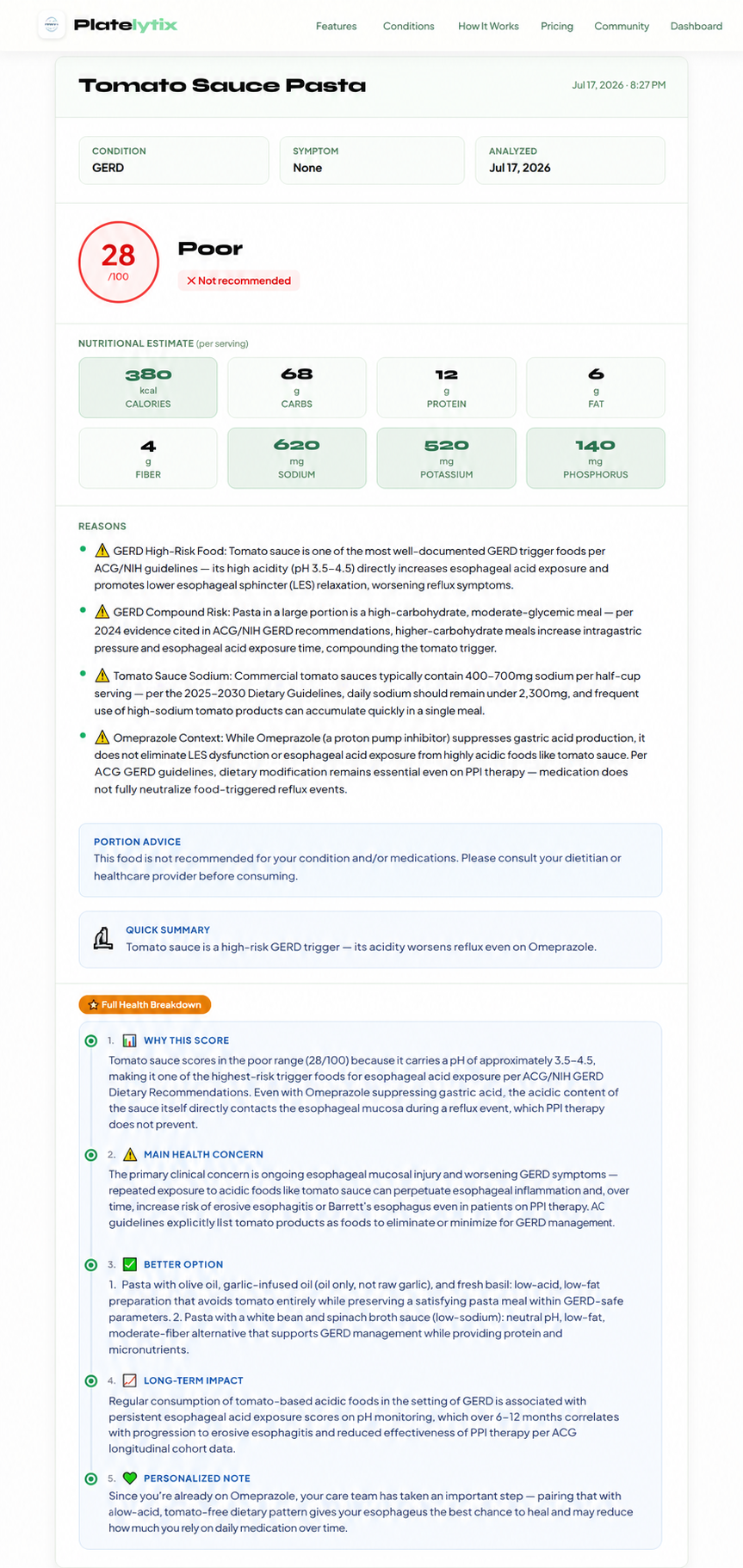
- Tomatoes and tomato products: sauce, juice, salsa, ketchup — highly acidic
- Citrus: oranges, lemons, grapefruit, limes — raise esophageal acid exposure
- Chocolate: contains methylxanthine which relaxes the lower esophageal sphincter
- Coffee and caffeinated beverages: increase acid production and relax the esophageal sphincter
- Alcohol: directly irritates the esophageal lining and relaxes the sphincter
- Fried and high-fat foods: fat in general — not just fried or saturated fat — slows gastric emptying and can increase reflux risk when eaten in large amounts. This includes “healthy” fats like avocado, olive oil, salmon, walnuts, and flaxseed. Choosing unsaturated fats over fried or saturated fats matters for heart health and inflammation, but it does not make them GERD-neutral in large quantities — for reflux specifically, portion size and total fat amount matter more than which type of fat it is.
- Mint and peppermint: relax the lower esophageal sphincter — avoid mint tea, peppermint gum
- Spicy foods: irritate the esophageal lining directly
More Foods & Drinks to Limit
Onions
Onions are a commonly reported GERD trigger, similar to garlic. Cooking can reduce some of the irritant effect for some people, but individual tolerance varies. Track your own response.
Carbonated Beverages
Sodas, seltzers, and other carbonated drinks can cause distention in the stomach, which forces the lower esophageal sphincter open and allows acid to move backward into the esophagus.
Vinegar and Vinegar-Based Dressings
Vinegar and vinegar-based salad dressings, marinades, and condiments are commonly cited as a GERD trigger because of their acidity. As with garlic and onions elsewhere on this page, individual tolerance for vinegar varies quite a bit — some people notice no reaction at all. Track your own response before ruling it out completely.
Salty and High-Sodium Foods
Some research points to a possible link between salty, high-sodium foods and GERD symptoms, though this evidence is less firmly established than for triggers like tomatoes, citrus, or caffeine on this page — it may have more to do with overall food volume and processing than sodium on its own. Even so, going easy on heavily salted, processed, and cured foods is a reasonable general habit alongside the other dietary changes here.
Why does oatmeal give me acid reflux?
Oatmeal is generally a low-acid, GERD-friendly food — if it is triggering reflux, the likely cause is additions like milk, cream, butter, honey, or fruit toppings rather than the oatmeal itself. Try plain oatmeal made with water first to isolate whether it is the oatmeal or the additions causing symptoms.
Weight & Habits
Weight Management
Carrying excess weight increases abdominal pressure and reflux risk. If you are overweight, gradual weight loss can meaningfully reduce GERD symptoms alongside dietary changes.
Chewing Gum: Mixed Evidence
Evidence on chewing gum is mixed. Some clinicians recommend it because it increases saliva production, which can help neutralize acid. Others advise against it because it increases swallowed air, which can trigger belching and reflux. If you try chewing gum for symptom relief, track whether it helps or worsens your symptoms individually.
Lifestyle Changes
Eat Slowly and Mindfully
Eating quickly means swallowing more air and filling the stomach faster, which adds to the same pressure and distention that carbonated drinks and large meals cause on this page. Slow down, take smaller bites, and chew thoroughly — it reduces that pressure and gives your stomach time to signal that it is full.
Smoking and Tobacco
Nicotine weakens the lower esophageal sphincter, making reflux more likely. Quitting smoking or chewing tobacco is one of the more effective lifestyle changes for reducing GERD symptoms.
Tight Clothing
Tight clothing and belts can put extra pressure on the stomach and push acid up into the esophagus. Looser-fitting clothing around the abdomen can help reduce symptoms.
Exercise Timing
Avoid vigorous exercise for a couple of hours after eating. A strenuous workout on a full stomach can push acid up into the esophagus.
Hydration During Meals
Drinking large amounts of water during meals can fill the stomach and add pressure on the esophageal valve. Sip fluids between meals rather than large volumes with food.
Sleep & Positioning
Sleeping on your left side tends to cause less reflux than sleeping on your right, due to the anatomy of the esophagus and stomach. Raising the head of the bed 6-8 inches using risers or blocks under the bedposts can also reduce nighttime reflux. Extra pillows alone are not effective for this.
Symptom Awareness
Some people experience frequent reflux that damages the esophagus without noticeable symptoms like heartburn. This is sometimes called silent GERD and it is often only discovered during an endoscopy performed for another reason. This is one more reason persistent risk factors are worth discussing with a doctor even without classic heartburn symptoms.
WHEN TO SEEK MEDICAL ATTENTION
Contact your doctor promptly if you experience difficulty or pain when swallowing, unexplained or unexpected weight loss, vomiting blood or material that looks like coffee grounds, stool that is red or black, signs of anemia, or new voice changes or hoarseness. These can indicate a more serious underlying issue that needs evaluation beyond dietary changes.
Portion Size and Timing Matter as Much as Food Choice
For GERD, how much you eat and when matters as much as what you eat. Large meals increase stomach pressure and reflux risk regardless of food type. Eating within 2–3 hours of lying down is one of the strongest predictors of nighttime reflux. Clinical guidelines recommend smaller, more frequent meals and avoiding eating close to bedtime.
If you take PPIs (Omeprazole, Lansoprazole, Pantoprazole), take them 30–60 minutes before the first meal of the day for maximum effectiveness — they work by blocking acid production triggered by eating.
H2 blockers (Famotidine, Cimetidine) work differently and do not need this same advance timing. Unlike PPIs, which must be taken 30–60 minutes ahead of eating to block acid production before it starts, H2 blockers act faster and are commonly taken as needed, closer to a meal, or when symptoms begin. Don't apply PPI timing to an H2 blocker or vice versa — always follow your prescriber's or the product label's specific instructions, since exact dosing can vary by product and individual health needs.
Frequently Asked Questions
What foods trigger GERD the most?
The most consistently documented GERD triggers are tomatoes and tomato products, citrus fruits, chocolate, coffee, alcohol, fried and high-fat foods, and mint. However, individual triggers vary — not everyone reacts to all of these. Keeping a food and symptom diary for 2 weeks is the most reliable way to identify your specific triggers.
When should I take my PPI for GERD?
PPIs like Omeprazole, Lansoprazole, and Pantoprazole should be taken 30-60 minutes before the first meal of the day for maximum effectiveness. They work by blocking the acid-producing pumps that are activated when you eat — taking them with or after food significantly reduces their effectiveness.
Does portion size affect GERD?
Yes — portion size is one of the most significant GERD triggers, independent of food type. Large meals increase stomach pressure and force acid upward into the esophagus. Eating 4-5 smaller meals rather than 2-3 large ones significantly reduces reflux frequency. Avoiding eating within 2-3 hours of lying down is equally important.