CKD Stage 3 Diet: What to Eat and Avoid
What to Eat on a CKD Stage 3 Diet
- Low-potassium vegetables: green beans, cabbage, cauliflower (boiled), carrots, cucumbers — boiling reduces potassium by 30–50%
- Low-phosphorus proteins: egg whites, fresh chicken or turkey (not processed), fresh fish — organic phosphorus from whole foods is only 40–60% absorbed
- Refined grains: white rice, white bread, pasta — lower in potassium and phosphorus than whole grain versions
- Controlled protein: target 0.8g/kg/day per KDOQI 2020 — a 70kg person needs approximately 56g protein daily
- Herbs and spices: use instead of salt — garlic powder (not garlic salt), black pepper, rosemary, thyme
How much protein can I have per day with CKD Stage 3?
KDIGO 2024 and NKF KDOQI 2020 recommend 0.8g of protein per kilogram of body weight per day for CKD Stage 3. For a 70kg person that is approximately 56g of protein daily — enough to prevent malnutrition while slowing GFR decline.
Is peanut butter bad for Stage 3 kidney disease?
Peanut butter is moderate-to-high in both potassium and phosphorus, making it a caution food for CKD Stage 3 rather than a daily staple. A small serving of 1-2 tablespoons is generally tolerable if serum potassium is within normal range, but it should not replace lower-risk protein sources like egg whites or fresh chicken.
What is the low phosphorus food list for kidney disease?
Low phosphorus foods safe for CKD include egg whites, fresh chicken or turkey, white rice, white bread, pasta, cabbage, green beans, carrots, cucumbers, and apples. Avoid processed foods with phosphate additives — inorganic phosphorus from food additives is 90-100% absorbed compared to 40-60% from whole foods, making it significantly more dangerous for CKD patients.
UNDERSTANDING STAGE 3A VS. 3B
Stage 3 CKD is often split into two sub-stages: Stage 3a (eGFR 45-59) and Stage 3b (eGFR 30-44). Many people receive their CKD diagnosis during Stage 3a, since this is typically the first stage confirmable with a blood test alone. Dietary restrictions, particularly around sodium and protein, tend to become more important moving from 3a into 3b as kidney function declines further.
HOW YOUR KIDNEY FUNCTION IS MEASURED
Alongside eGFR, your doctor may look at Blood Urea Nitrogen (BUN) and creatinine. BUN measures nitrogen from urea, a waste product created when your body breaks down protein; healthy kidneys keep BUN from rising too high. Creatinine is a waste product filtered out of the blood and passed into urine. A rising blood creatinine alongside falling urine creatinine can signal reduced kidney function. Your nephrologist may use the BUN-to-creatinine ratio together with eGFR to assess how well your kidneys are working.
WHY PLANT PROTEIN IS EASIER ON PHOSPHORUS
Plant-based protein sources like beans, lentils, nuts, and whole grains contain phosphorus in a form called phytate, of which only about one-third is absorbed by the body. Animal protein sources are the opposite — roughly two-thirds of their phosphorus is absorbed. This means plant-based proteins are significantly easier on phosphorus balance even when the numbers on a nutrition label look similar to animal proteins. Good plant protein options include tofu, tempeh, and lentils in moderate portions.
WATCH FOR SIGNS OF FLUID RETENTION
At Stage 3, watch for sudden weight gain, shortness of breath, swelling in your feet, hands, or face, or new or worsening high blood pressure. These can indicate your kidneys are struggling to keep up with fluid removal and are worth discussing with your doctor promptly.
PORTION SIZES IN EVERYDAY TERMS
A cooked portion of chicken, fish, or meat is about 2 to 3 ounces, roughly the size of a deck of cards. A portion of dairy is about ½ cup of milk or yogurt, or one slice of cheese. A portion of cooked beans is about ½ cup, and a portion of nuts is about ¼ cup.
What to Avoid with CKD Stage 3
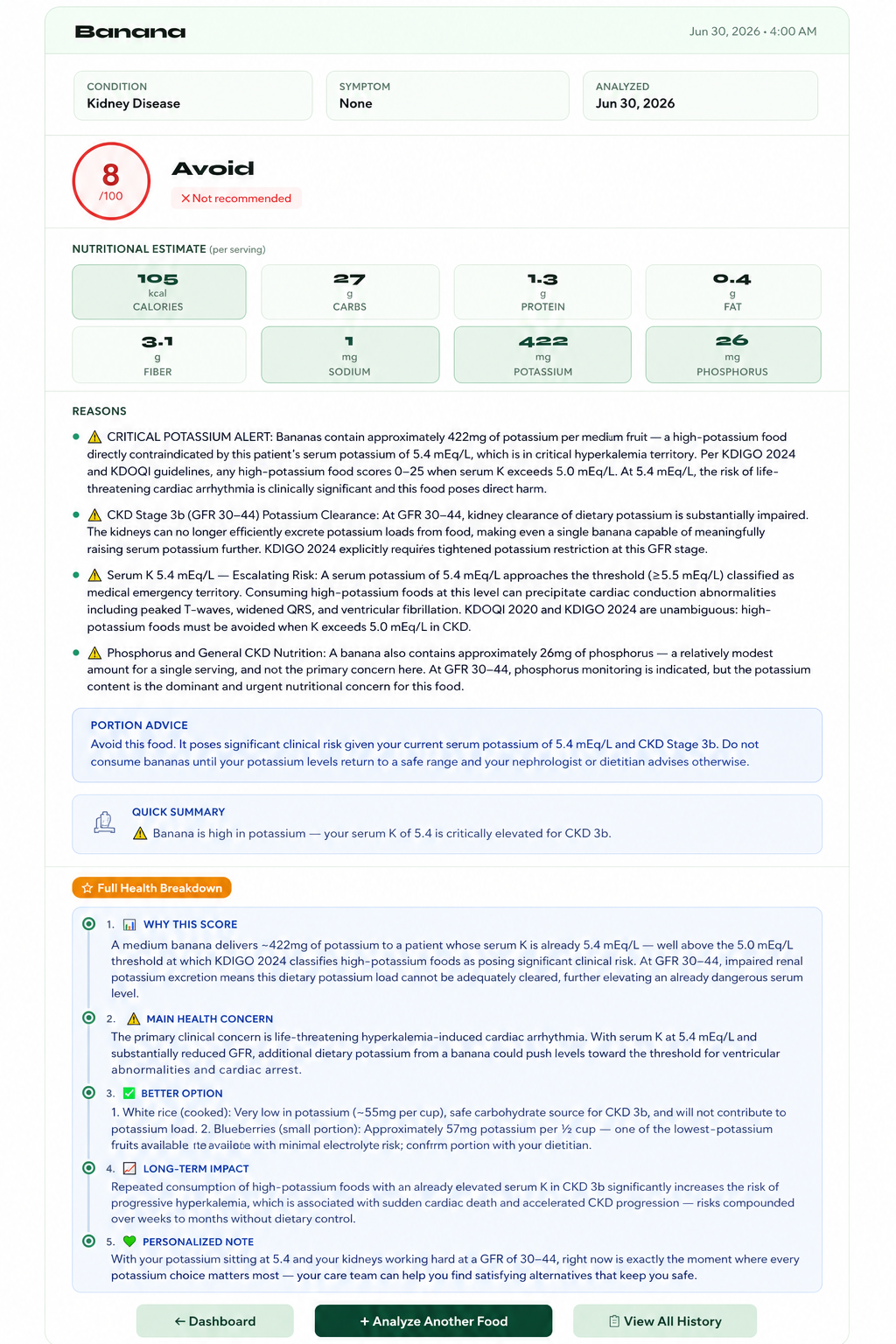
- High-potassium foods: bananas, oranges, potatoes, tomatoes, avocados, spinach — especially if serum K is above 4.5
- Phosphate additives: processed meats, dark colas, fast food — inorganic phosphorus is 90–100% absorbed and far more dangerous than whole food phosphorus
- Salt substitutes: most contain potassium chloride — dangerous on ACE inhibitors or ARBs
- High-protein diets: protein shakes, red meat daily, large chicken portions — accelerate GFR decline at Stage 3
- Processed and packaged foods: high in sodium and phosphate additives
Can I eat tomatoes with CKD Stage 3?
Tomatoes and tomato products are high in potassium and are generally restricted at CKD Stage 3, especially if serum potassium is above 4.5 mEq/L. Whether you can eat them occasionally depends on your individual lab values — discuss your specific potassium targets with your nephrologist or dietitian.
PHOSPHORUS DAILY TARGET
A general target for Stage 3 CKD is no more than 800mg of phosphorus per day.
ALCOHOL
If you drink alcohol, limit it to no more than one drink per day for women and two per day for men. Excess alcohol can damage the liver, heart, and brain and compound existing health risks. Ask your doctor how much alcohol, if any, is safe for you specifically.
REGULAR MULTIVITAMINS
Regular multivitamin supplements may not be appropriate for CKD Stage 3, since some contain more phosphorus and potassium than is safe. If supplementation is needed, your doctor may prescribe special forms of vitamin D, folic acid, or iron instead. Don't start any over-the-counter vitamin or mineral supplement without checking with your care team first.
Medication Interactions at CKD Stage 3
Most CKD Stage 3 patients are on ACE inhibitors or ARBs (Lisinopril, Losartan, Ramipril). These medications raise serum potassium — meaning high-potassium foods carry compounded risk. If you are also on a potassium-sparing diuretic like spironolactone, the risk is further elevated. Clinical guidelines recommend discussing your specific potassium targets with your nephrologist before making dietary changes.
If you take phosphate binders (Sevelamer, PhosLo), take them with the first bite of every meal — not before or after. Timing is essential for the medication to work.