Celiac Disease Diet: Complete Gluten-Free Guide
Gluten-Free Foods Safe for Celiac
- Naturally gluten-free grains: rice, quinoa, corn, oats (certified gluten-free only), millet, buckwheat, amaranth, sorghum, teff
- All plain proteins: meat, poultry, fish, seafood, eggs, legumes — naturally gluten-free
- All plain vegetables and fruits: no gluten in unprocessed produce
- Plain dairy: milk, cheese, butter, yogurt — naturally gluten-free (check flavored versions)
- Certified gluten-free products: look for the certified GF symbol — under 20 ppm gluten by law in the US
Are oats safe with celiac disease?
Plain oats are naturally gluten-free but are almost universally contaminated during processing — only certified gluten-free oats are safe for celiac disease. Even with certified gluten-free oats, a small subset of celiac patients react to avenin, a protein in oats — introduce slowly and monitor symptoms carefully per ACG 2025 guidelines.
What nutrients does celiac disease deplete?
Celiac disease damages the small intestine and impairs absorption of iron, calcium, Vitamin D, B12, folate, zinc, and magnesium — ACG 2025 recommends screening for all of these at diagnosis. These deficiencies can persist for months to years after starting a gluten-free diet while the intestine heals, so supplementation and regular monitoring are essential even after going gluten-free.
How much gluten causes intestinal damage in celiac?
As little as 10-50mg of gluten per day — approximately one-hundredth of a slice of bread — can cause ongoing intestinal mucosal injury in celiac disease, and some patients react to as little as 1mg. This is why cross-contamination from shared cooking surfaces, utensils, and fryers is a genuine clinical risk, not merely a preference.
Sources of Gluten to Avoid
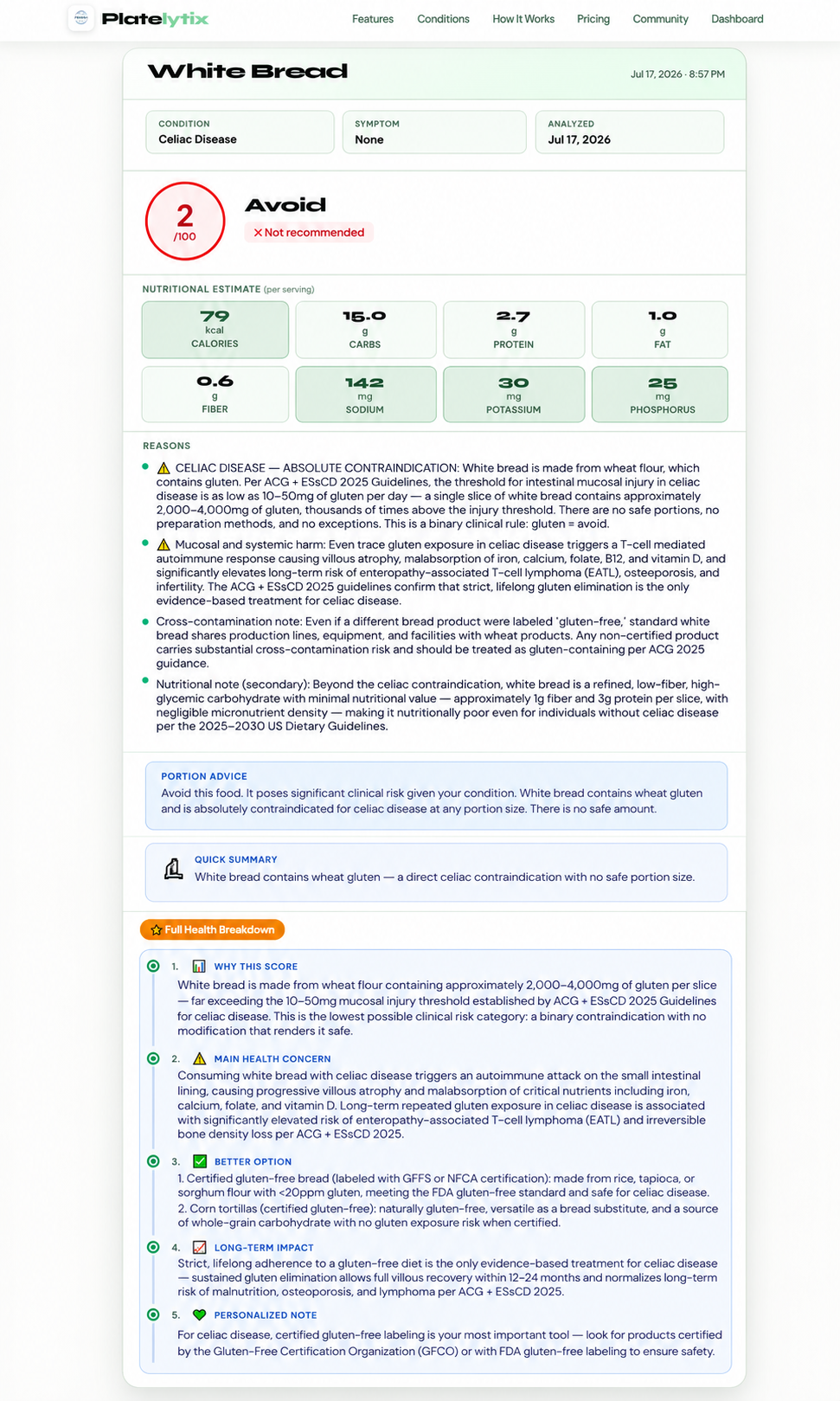
- Wheat in all forms: bread, pasta, crackers, flour, semolina, spelt, kamut, farro, durum, bulgur
- Barley: malt, malt vinegar, beer, some soups and cereals
- Rye: rye bread, some crackers
- Hidden gluten sources: soy sauce (most contain wheat), many salad dressings, some medications, communion wafers, lipstick
- Cross-contamination risks: shared fryers, shared cutting boards, bulk bin oats — cross-contamination can occur at very low levels
- Regular oats: oats are naturally gluten-free but almost always contaminated during processing — only certified gluten-free oats are safe
What are hidden sources of gluten in food?
Common hidden gluten sources include soy sauce (most brands contain wheat), malt vinegar, many salad dressings and marinades, modified food starch when wheat-derived, imitation seafood, some medications and supplements, and regular oats contaminated during processing. Always read ingredient labels and look for the certified gluten-free symbol rather than assuming a product is safe based on its category.
Nutrient Deficiencies in Celiac Disease
Untreated celiac disease damages the small intestine lining, impairing absorption of iron, calcium, Vitamin D, B12, folate, zinc, and magnesium. Even after going gluten-free, deficiencies can persist for months to years while the intestine heals. ACG 2025 guidelines recommend screening for iron deficiency anemia, bone density (DEXA scan), Vitamin D, B12, and folate at diagnosis and at regular intervals.