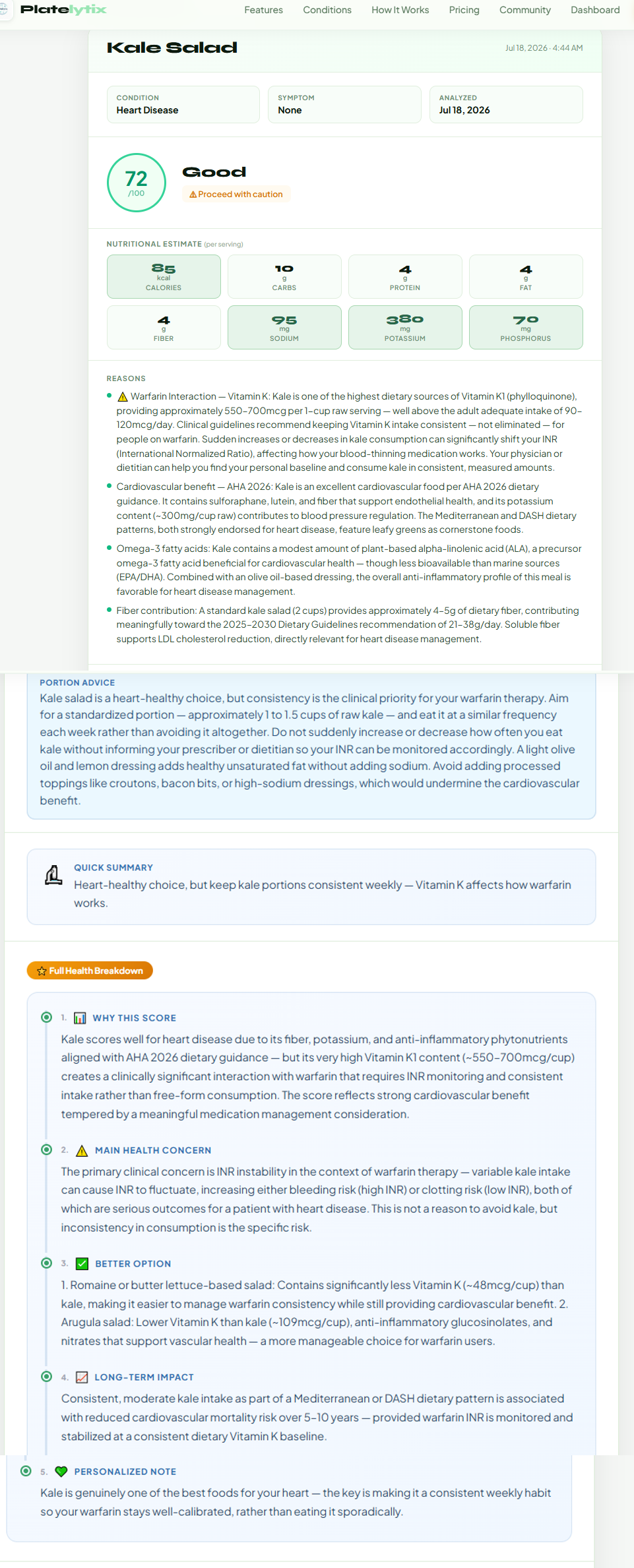
Warfarin and Food: The Vitamin K Consistency Rule
Foods to Eat Consistently on Warfarin
- Leafy greens in consistent amounts: spinach, kale, broccoli, Brussels sprouts — do not eliminate these. Eat the same amount week to week. Your warfarin dose is calibrated to your usual intake
- Fruits low in Vitamin K: apples, bananas, berries, oranges — generally safe with minimal INR impact
- Lean proteins: chicken, fish, eggs — low Vitamin K, safe in normal amounts
- Grains: rice, pasta, bread — low Vitamin K
Can I eat leafy greens on warfarin?
Yes — and clinical guidelines specifically recommend eating leafy greens consistently rather than eliminating them, as your warfarin dose is calibrated around your usual Vitamin K intake. The danger is sudden large changes in consumption — not moderate consistent intake. If you want to eat more or fewer leafy greens than usual, tell your anticoagulation clinic first so your dose can be adjusted accordingly.
What is the consistent Vitamin K rule for warfarin?
The clinical rule for warfarin and Vitamin K is consistency, not elimination — keep your weekly Vitamin K intake stable rather than trying to minimize it, because your warfarin dose is meant to be calibrated around your normal diet. Sudden increases in leafy green intake raise INR risk, and sudden decreases can drop INR below therapeutic range — both are dangerous, which is why consistency is the clinical priority.
What to Monitor or Avoid on Warfarin
- Sudden large increases in leafy greens: starting a green juice habit or dramatically increasing salad portions can drop your INR below therapeutic range
- Cranberry juice in large amounts: may increase warfarin effect and raise bleeding risk — limit to small occasional amounts
- Alcohol: more than 1-2 drinks raises bleeding risk — discuss safe limits with your physician
- Turmeric and fish oil supplements: additive anticoagulant effect — discuss any supplement use with your prescriber
- Grapefruit in large amounts: some interaction evidence — discuss with your physician
Does cranberry juice affect warfarin?
Yes — large amounts of cranberry juice may increase the anticoagulant effect of warfarin and raise bleeding risk, though occasional small amounts are generally considered low risk. Regular large consumption should be discussed with your anticoagulation team as it may require a dose adjustment — the same applies to cranberry supplements which are more concentrated.
Can I take fish oil on warfarin?
High-dose fish oil has an additive anticoagulant effect with warfarin that can raise bleeding risk, and clinical guidelines recommend discussing any supplement use with your prescriber before starting or stopping. This applies to turmeric, Vitamin E, and ginger supplements as well — all have antiplatelet effects that compound warfarin's anticoagulant action.
The Most Important Rule: Consistency
Clinical guidelines are clear — the goal on warfarin is a consistent Vitamin K intake, not a low one. If you eat spinach three times a week, keep eating it three times a week. If you stop suddenly, your INR will rise. If you dramatically increase intake, your INR will fall. Your warfarin dose is meant to be calibrated around your normal diet.
If you want to change your diet significantly, tell your anticoagulation clinic first so your dose can be adjusted accordingly.