Home Nutrition Guides Lisinopril and Food Interactions
Medication & Food
🔍 Monitor Closely

Lisinopril and Food: What You Need to Know

Lisinopril is an ACE inhibitor prescribed for hypertension, heart failure, and diabetic kidney disease. It works by blocking the enzyme that raises blood pressure — but as a side effect, it also raises serum potassium. This means high-potassium foods that are healthy for most people can be dangerous on Lisinopril, especially if you also have CKD or reduced kidney function.
See How Your Meals Score for Your Exact Profile
Platelytix accounts for your conditions, medications, and lab values — not generic advice.
Try Free — No Account Needed → Create Free Account

Foods Generally Safe on Lisinopril

  • Low-potassium vegetables: green beans, cabbage, broccoli (moderate), carrots, cucumbers, corn
  • White rice, pasta, bread: low in potassium, safe in normal portions
  • Chicken, fish, eggs: moderate potassium, safe in standard portions
  • Apples, berries, grapes: lower potassium fruits, generally safe
  • Dairy in moderation: milk, yogurt, cheese — moderate potassium, acceptable in normal amounts

Can I eat bananas on Lisinopril?

Bananas are high in potassium, and Lisinopril raises serum potassium by blocking its excretion — eating bananas regularly on Lisinopril, especially with reduced kidney function, can cause dangerous potassium accumulation called hyperkalemia. Whether you can eat them occasionally depends on your current serum potassium level and kidney function — discuss your specific potassium targets with your physician before including bananas regularly.

Does grapefruit interact with Lisinopril?

No — grapefruit does not significantly interact with Lisinopril, as the grapefruit-drug interaction primarily affects medications metabolized by the CYP3A4 enzyme such as certain statins and calcium channel blockers. Lisinopril is not metabolized this way, so grapefruit consumption is not a concern specific to this medication.

What potassium level is dangerous on Lisinopril?

Serum potassium above 5.0 mEq/L is a clinical warning sign requiring dietary review and possible dose adjustment when taking Lisinopril, and above 5.5 mEq/L requires immediate medical attention. Regular potassium monitoring through blood tests is essential on ACE inhibitors, particularly in patients who also have CKD, diabetes, or take other potassium-raising medications.

Foods to Avoid or Limit on Lisinopril

  • Salt substitutes: most contain potassium chloride — this is one of the most dangerous interactions. Never use salt substitutes on Lisinopril without physician approval
  • Bananas, oranges, avocados: high potassium — limit frequency and portion size
  • Potatoes, sweet potatoes: high potassium — boiling and discarding water reduces content by 30–50%
  • Tomatoes and tomato products: tomato sauce, paste, juice — concentrated potassium source
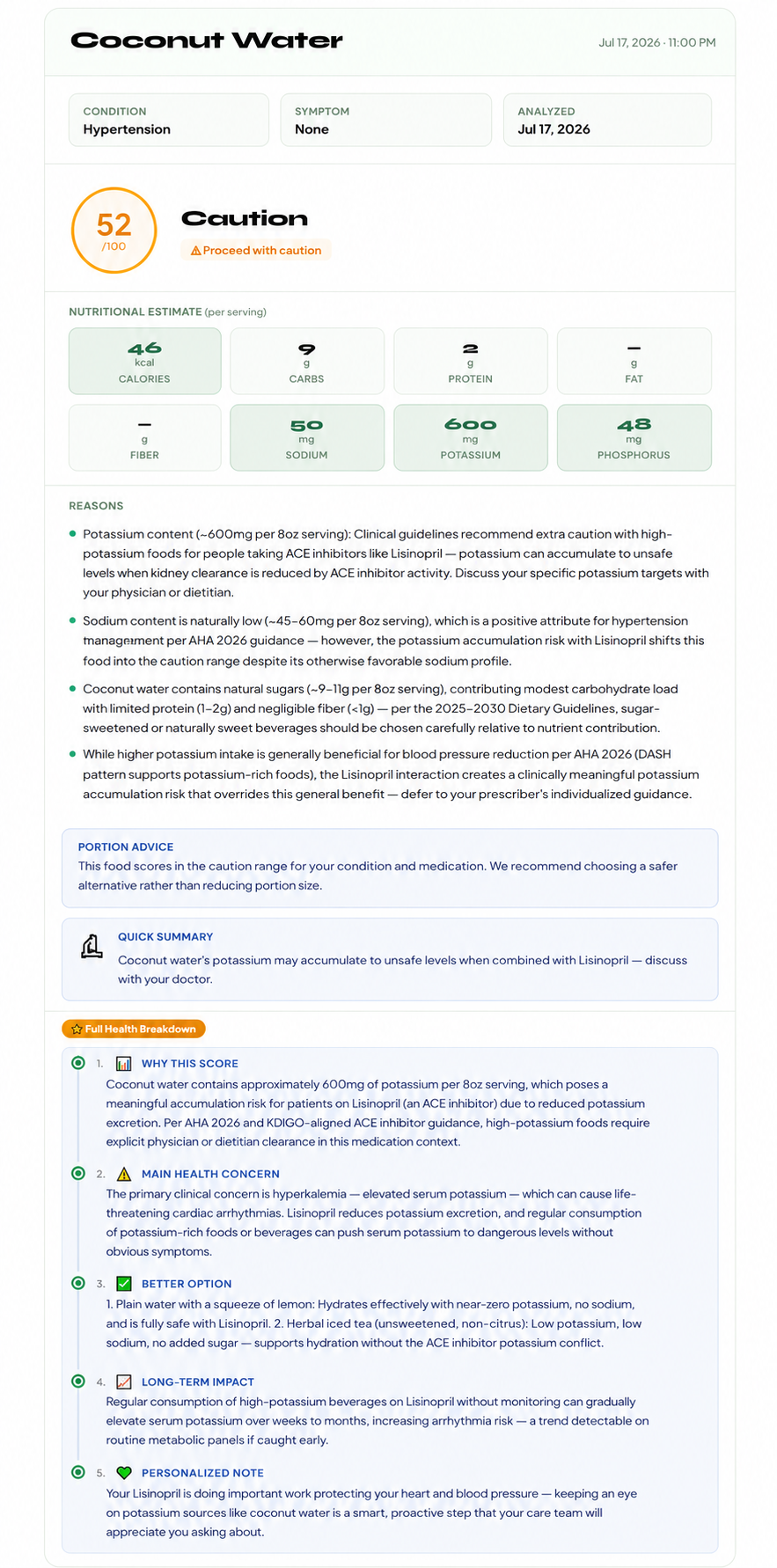
  • Coconut water: very high potassium — avoid on Lisinopril
  • Potassium supplements: never take without physician direction on Lisinopril

Is LoSalt safe to use with ACE inhibitors?

No — LoSalt and most salt substitutes contain potassium chloride, which significantly raises serum potassium on ACE inhibitors like Lisinopril, creating dangerous hyperkalemia risk. This is one of the most underrecognized food-drug interactions in hypertension management — never use salt substitutes on Lisinopril without explicit physician approval.

How much potassium is in common foods to avoid on Lisinopril?

Key potassium amounts per serving: banana (422mg), baked potato (610mg), cooked spinach (840mg per cup), avocado (708mg per half), orange juice (496mg per cup), coconut water (600mg per cup), and tomato sauce (728mg per half cup). These numbers matter on Lisinopril because the medication blocks aldosterone, which normally signals the kidneys to excrete potassium — meaning dietary potassium accumulates more than it would in someone not taking an ACE inhibitor.

Does Lisinopril raise or lower potassium?

Lisinopril raises serum potassium — it does not lower it. Lisinopril blocks the enzyme that produces angiotensin II, which reduces aldosterone. Aldosterone normally tells the kidneys to excrete potassium. With less aldosterone, your kidneys retain potassium instead of eliminating it, causing serum potassium to rise. This is why high-potassium foods and salt substitutes containing potassium chloride are genuinely dangerous on this medication.

Should Lisinopril be taken with food?

Lisinopril can be taken with or without food — unlike some medications, food does not significantly affect its absorption. However, the foods you eat alongside Lisinopril long-term matter significantly — consistent high-potassium dietary patterns compound the medication's potassium-retaining effect over time. Taking the medication at the same time each day matters more than whether you take it with a meal.

Can I eat eggs while taking Lisinopril?

Yes — eggs are low in potassium (approximately 63mg per egg) and do not significantly interact with Lisinopril. Eggs are one of the safer protein sources on this medication. The concern with Lisinopril is specifically high-potassium foods and salt substitutes containing potassium chloride — eggs, chicken, fish, and most grains are well within safe range.

Critical Drug-Food Interactions with Lisinopril

Clinical guidelines recommend limiting high-potassium foods for people taking ACE inhibitors like Lisinopril — potassium can accumulate to unsafe levels (hyperkalemia) when kidney clearance is reduced. The risk is compounded if you also take spironolactone, potassium-sparing diuretics, or NSAIDs like ibuprofen.

Serum potassium above 5.0 mEq/L is a clinical warning sign — any high-potassium food at this level scores in the danger range. Above 5.5 mEq/L requires immediate medical attention.

Grapefruit does not interact with Lisinopril specifically — this concern applies more to statins and some calcium channel blockers.

Clinical reference: ACE inhibitors inhibit aldosterone secretion, which normally promotes potassium excretion. The result is potassium retention — meaning dietary potassium intake has a larger effect on serum levels than in people not on this medication. This effect is amplified with reduced kidney function (eGFR below 60).
Analyze Your Meals Against Your Conditions
Enter any food and Platelytix scores it against your medications, lab values, and conditions simultaneously.
Score a Meal Free →
🔬 Score a Food for Lisinopril and Food Interactions
Enter any food below and see how it scores for this condition — powered by the same clinical engine used by Platelytix members.
Example Score Output
Example Platelytix score for Lisinopril and Food Interactions
Score Of A User Taking Lisinopril
⚕️ This page is for educational purposes only and does not constitute medical advice. Always consult your physician or registered dietitian before making dietary changes, especially when managing chronic conditions or taking medications.