Furosemide (Lasix) and Food: Electrolyte Management
What to Eat on Furosemide
- Potassium-rich foods: bananas, oranges, potatoes, avocado, spinach — furosemide depletes potassium and these foods help replenish it (unless you also have CKD with elevated serum K)
- Adequate sodium: do not cut sodium to zero on furosemide — some sodium intake is needed to maintain electrolyte balance. Follow your physician's specific sodium target
- Magnesium-rich foods: nuts, seeds, leafy greens — furosemide also depletes magnesium
- Consistent fluid intake: dehydration is a significant risk on loop diuretics — drink as directed by your physician
Should I eat more potassium on furosemide?
Furosemide depletes potassium through increased urinary excretion, so potassium-rich foods are generally beneficial on this medication — the opposite of potassium-sparing diuretics like spironolactone. However if you also have CKD or elevated serum potassium, this recommendation changes — your physician should set your specific potassium targets based on your individual lab values.
Does furosemide deplete magnesium?
Yes — furosemide causes urinary losses of potassium, sodium, magnesium, and calcium, and magnesium deficiency can cause muscle cramps, weakness, and heart rhythm issues. Magnesium-rich foods including nuts, seeds, leafy greens, and whole grains are beneficial on long-term furosemide therapy, alongside regular monitoring of serum magnesium levels.
What to Monitor on Furosemide
- Excessive sodium restriction: cutting sodium too aggressively on furosemide can cause hyponatremia (dangerously low sodium) — follow your physician's specific target rather than generic low-sodium guidelines
- Licorice: raises sodium retention and reduces the effectiveness of diuretics
- NSAIDs: reduce the diuretic effect of furosemide and raise kidney stress
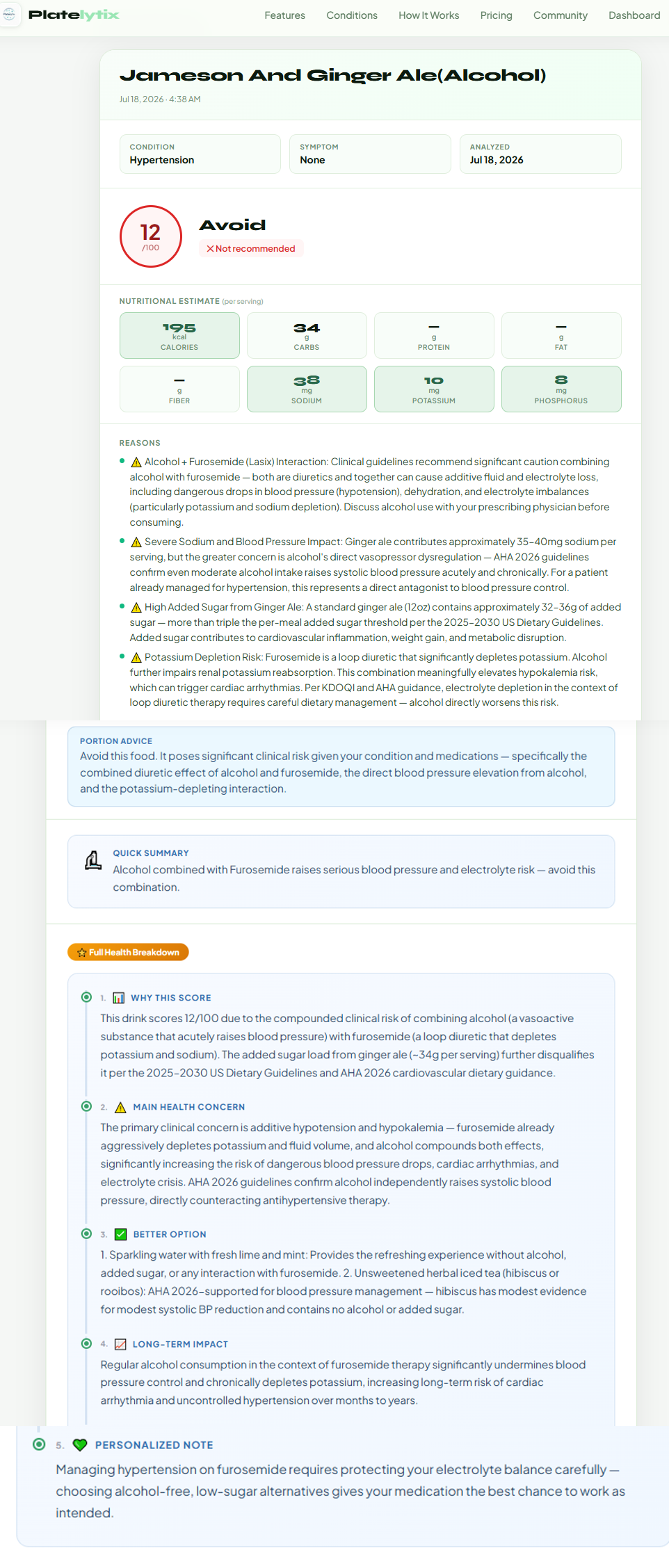
- Alcohol: compounds dehydration risk on diuretics
Can cutting salt be dangerous on furosemide?
Yes. Furosemide already causes significant sodium loss through urine, and simultaneously restricting dietary sodium very aggressively can drop serum sodium to dangerous levels, causing hyponatremia with symptoms including confusion, dizziness, and fatigue. Your sodium intake target while on furosemide should be individualized by your physician based on your serum sodium levels and fluid status and not based on generic low-sodium guidelines designed for the general population.
Why Salt Restriction Can Be Dangerous on Furosemide
Furosemide causes significant sodium loss through urine. If you simultaneously restrict dietary sodium to very low levels, serum sodium can drop dangerously — a condition called hyponatremia. Symptoms include confusion, dizziness, and in severe cases seizures. This is particularly important for older adults on furosemide who are also following general heart-healthy low-sodium diets.
Your sodium target on furosemide should be set by your physician based on your serum sodium levels and fluid status — not a generic guideline.