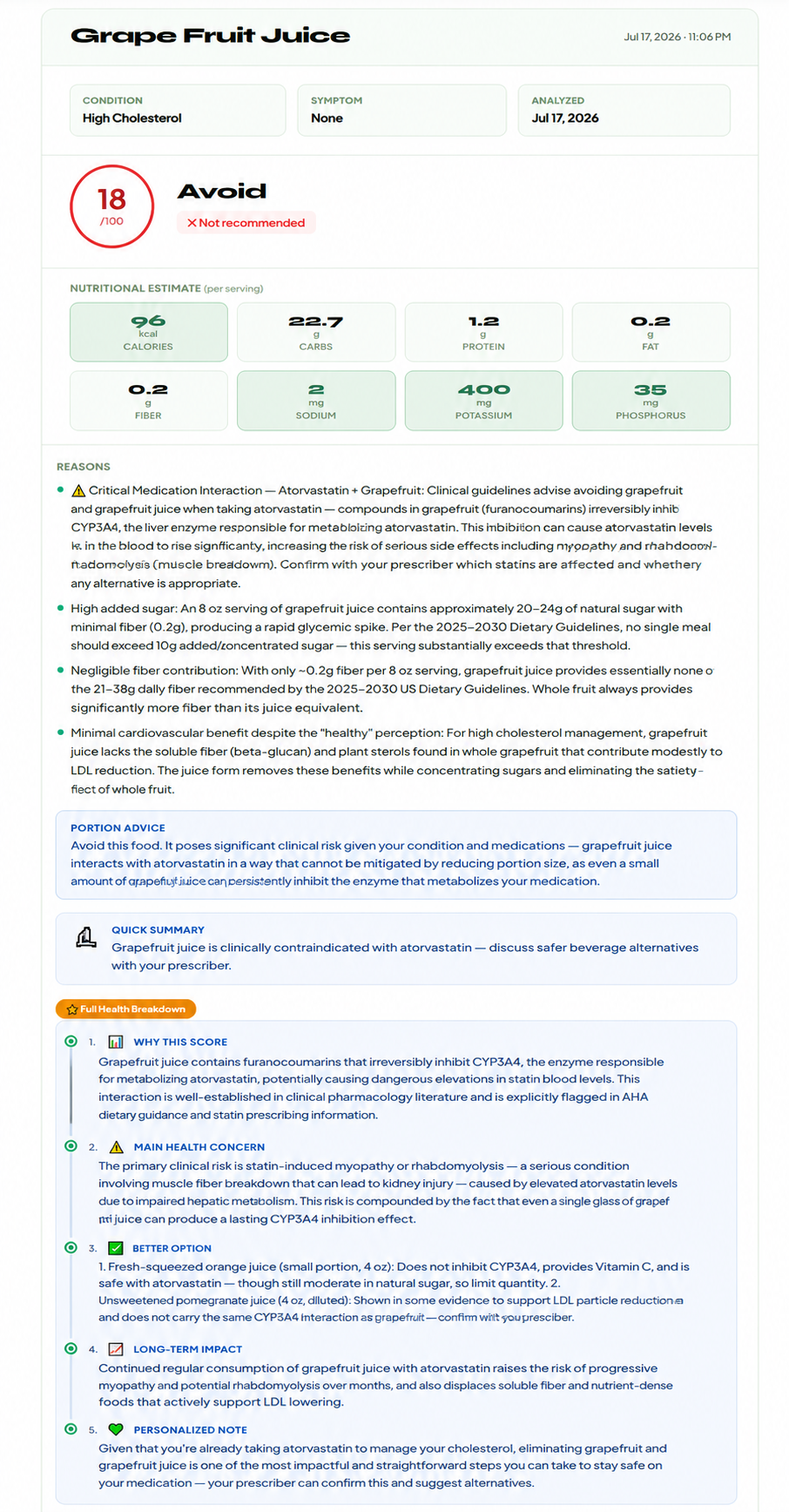
Atorvastatin (Lipitor) and Food: What You Need to Know
What to Eat on Atorvastatin
- Soluble fiber foods: oats, barley, legumes, apples, psyllium — soluble fiber actively lowers LDL cholesterol and works alongside the statin
- Fatty fish: salmon, mackerel, sardines — omega-3s reduce triglycerides and support cardiovascular health
- Plant sterols: fortified margarines, some orange juices — block cholesterol absorption
- CoQ10-containing foods: organ meats, fatty fish, nuts — statins can deplete CoQ10. Discuss supplementation with your physician
- Vegetables and fruits: antioxidants support cardiovascular health alongside statin therapy
Does atorvastatin deplete CoQ10?
Statins including atorvastatin inhibit an enzyme pathway that produces both cholesterol and CoQ10 in the body, which can reduce CoQ10 levels and may contribute to statin-associated muscle symptoms in some patients. Discuss CoQ10 supplementation with your physician if you experience muscle pain or fatigue on atorvastatin — the evidence for supplementation is mixed but widely practiced.
What foods help lower cholesterol on atorvastatin?
Soluble fiber foods (oats, legumes, barley, apples), fatty fish, and plant sterols in fortified foods actively compound the cholesterol-lowering effect of atorvastatin rather than replacing it. AHA and ACC guidelines emphasize that dietary changes alongside statin therapy produce greater LDL reduction than medication alone — the two approaches are additive.
What to Avoid on Atorvastatin
- Grapefruit and grapefruit juice: contains compounds (furanocoumarins) that block CYP3A4, the enzyme that metabolizes atorvastatin. This causes atorvastatin to accumulate to higher levels, raising muscle damage (myopathy) risk. Even one glass of grapefruit juice can affect levels for 24+ hours
- Pomelo and Seville orange: contain the same compounds as grapefruit — avoid these too
- Large amounts of alcohol: raises liver enzyme risk when combined with statins
- Saturated fat and trans fats: counteract the cholesterol-lowering effect of the medication
What happens if I eat grapefruit while taking 40mg atorvastatin?
Eating grapefruit while taking atorvastatin causes the medication to accumulate in your bloodstream at higher than intended levels, increasing the risk of myopathy (muscle pain and weakness) and in rare cases rhabdomyolysis (severe muscle breakdown that can damage kidneys). The interaction is dose-dependent and cumulative — regular grapefruit consumption while on atorvastatin poses significantly greater risk than a single accidental exposure.
Which statins are safe with grapefruit?
Rosuvastatin (Crestor), Pravastatin (Pravachol), Pitavastatin (Livalo), and Fluvastatin (Lescol) do not interact with grapefruit and can be taken safely alongside grapefruit consumption. The grapefruit interaction is specific to statins metabolized by the CYP3A4 enzyme — atorvastatin, simvastatin, and lovastatin are the primary affected medications. If grapefruit is important to your diet, discuss switching to a non-CYP3A4 statin with your physician.
How much grapefruit is actually dangerous with atorvastatin?
Even a single 8oz glass of grapefruit juice can raise atorvastatin blood levels significantly, and the effect can persist for 24-72 hours — meaning there is no safe timing window that eliminates the interaction. The FDA prescribing information notes that excessive consumption above 1.2 liters per day dramatically increases risk, but clinical guidance recommends avoiding grapefruit entirely on atorvastatin rather than trying to find a safe threshold, because individual CYP3A4 activity varies significantly between patients.
What happens if you accidentally eat grapefruit while taking atorvastatin?
A single accidental exposure to a small amount of grapefruit is unlikely to cause serious harm in most patients — the risk is cumulative and dose-dependent rather than catastrophic from a single exposure. If you regularly consume grapefruit and take atorvastatin, discuss this with your physician — you may need a statin that does not interact with CYP3A4, such as rosuvastatin or pravastatin, rather than simply eliminating a food you enjoy.
Grapefruit and Atorvastatin — The Full Explanation
Grapefruit inhibits CYP3A4, an enzyme in your gut and liver that breaks down atorvastatin. When this enzyme is blocked, atorvastatin levels in your blood rise significantly — increasing the risk of myopathy (muscle pain and weakness) and in rare cases rhabdomyolysis (severe muscle breakdown). The effect can last 24–72 hours from a single glass of grapefruit juice.
Note: not all statins are equally affected. Pravastatin and rosuvastatin are not metabolized by CYP3A4 and are safer with grapefruit. Discuss with your physician if grapefruit is important to your diet.