Kidney Health
How does Lisinopril affect my potassium levels with CKD?
Asked by giggz · 3 months, 1 week ago · 154 views
I was recently prescribed Lisinopril 10mg for blood pressure. I also have CKD Stage 3a. My doctor mentioned something about potassium but did not explain it clearly. How does this medication interact with my diet?
1 Answer
giggz
· 3 months, 1 week ago
This is one of the most important drug-diet interactions for CKD patients to understand. Lisinopril is an ACE inhibitor — it works by blocking angiotensin-converting enzyme, which has the side effect of reducing potassium excretion by the kidneys. In other words, your kidneys were already struggling to clear potassium due to CKD, & Lisinopril compounds that problem by reducing clearance further.
Per KDIGO 2024 guidelines, the combination of CKD and ACE inhibitor therapy creates what is called a potassium stacking risk. Foods that would be borderline acceptable for CKD alone become more concerning when Lisinopril is on board. This includes potassium-rich foods like bananas, sweet potatoes, spinach, oranges, tomatoes, and sports drinks.
Practically this means your potassium targets are tighter than someone with CKD Stage 3a who is not on an ACE inhibitor. Your physician should be monitoring your serum potassium more frequently now that Lisinopril has been added — typically at 1–2 weeks after initiation & then regularly thereafter.
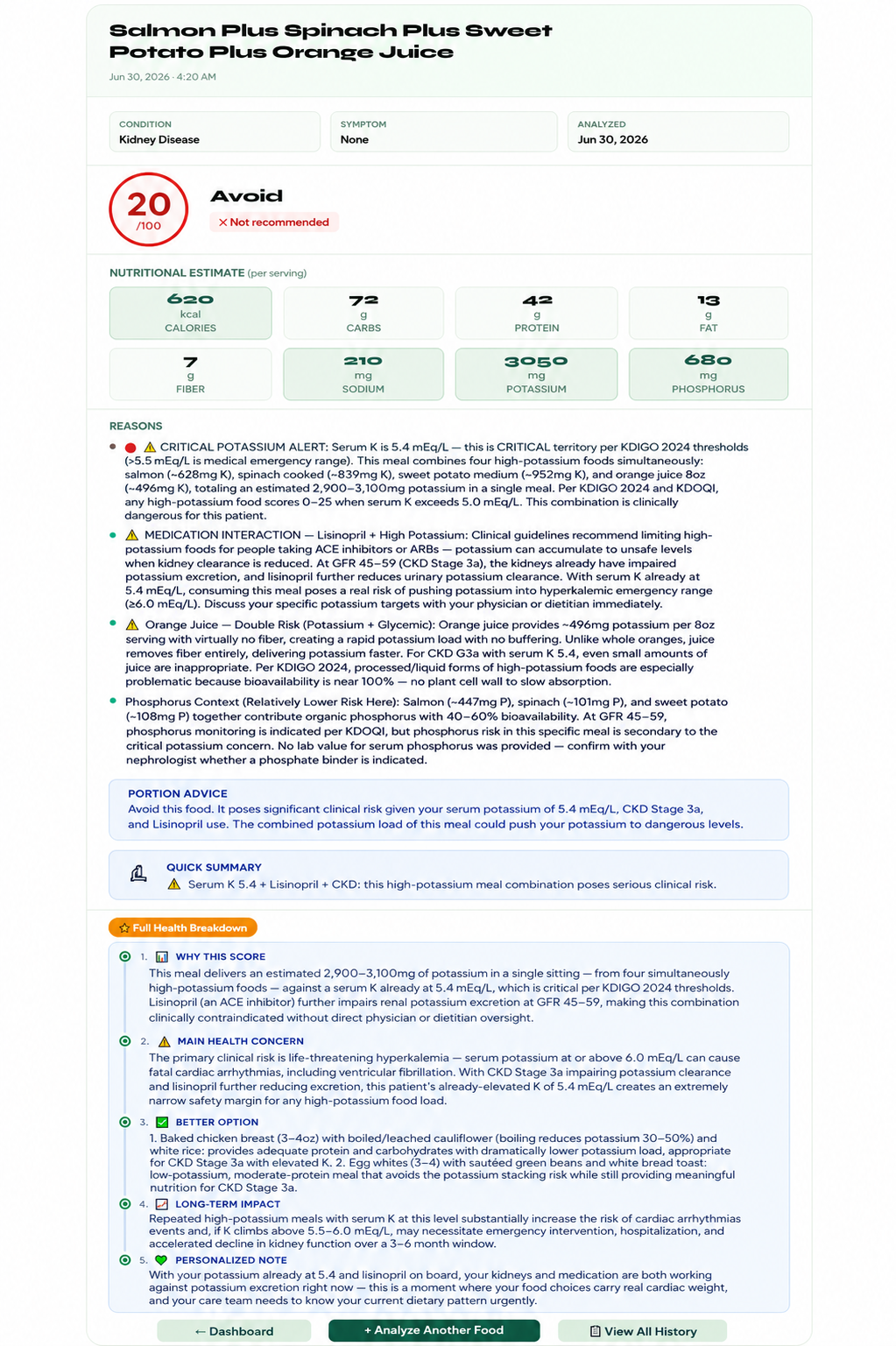
From a dietary standpoint, avoid stacking multiple high-potassium foods in the same meal. A meal with salmon plus spinach plus sweet potato plus orange juice can deliver over 2,500mg of potassium in one sitting which is dangerous at your stage & medication combination. Platelytix specifically flags ACE inhibitor and ARB potassium stacking risk when analyzing meals & accounts for both your CKD stage & medication list simultaneously.
Your Answer
Replying as a guest. Sign in for a richer experience — save your answers, earn upvotes, and track your contributions.