What to Eat When Ozempic Makes You Nauseous
Every list says "eat bland foods." Almost none of them ask what else you're managing and that's often what decides whether a nausea-relief meal actually works for you.
Every good medication is beset with unpleasant side effects, and Ozempic isn't immune to this. The first time I heard about Ozempic or more broadly, GLP-1 drugs was during my Endocrinology class. I listened as the professor explained the mechanism of action of GLP-1s and how useful they were for many diabetics (back then, most hadn't gained mainstream attention as weight-loss drugs). Like every drug, we also learned some of the side effects, and one happened to be nausea.
Nausea is one of the most common reasons people struggle in the first few weeks on Ozempic, or after a dose increase. Semaglutide slows down how fast your stomach empties, so food and the discomfort of digesting it, lingers longer than you're used to. The good news: what and how you eat has a real, direct effect on how bad it feels.
Not sure if a food is helping or working against you? Score any meal against your actual health profile.
Score a Meal Free: No Account NeededWhy It Happens
GLP-1 medications like Ozempic delay gastric emptying as part of how they work. That's part of why they help with blood sugar and appetite, but it also means your stomach is doing more work for longer after a meal. Nausea tends to peak early in treatment or right after a dose increase, and usually eases within a few weeks as your body adjusts.
Foods That Tend to Help
Bland, low-fat foods: crackers, toast, plain rice, oatmeal, eggs, plain Greek yogurt
Hydrating foods and drinks: clear broths, water, coconut water, watermelon, cucumber
Natural soothers: ginger tea, peppermint tea
Light protein pairings: eggs with toast, yogurt with fruit, beans with rice. Protein plus a simple carb keeps you from eating on an empty stomach without overloading it.
Foods That Tend to Make It Worse
Greasy or fried food, spicy or strongly scented meals, very sugary or rich desserts, and carbonated drinks or alcohol all tend to sit heavier and longer, which can intensify nausea.
It's Not Just What: It's How
Eat smaller meals, more often, instead of three large ones. Eat slowly and stop as soon as you feel satisfied; GLP-1s make fullness hit sooner than expected. Stay upright for a while after eating instead of lying down. And if drinking while eating makes things worse, try sipping fluids between meals instead.
Looking for nausea-friendly meals that are already bland, low-fat, and hydrating?
Browse the Recipe LibraryThe Part Most Nausea Lists Skip
Generic "eat bananas and broth" advice doesn't account for the fact that a lot of people on Ozempic are also managing something else: CKD, hypertension, diabetes. Broth and bananas are common nausea foods, but they're also high-sodium and high-potassium respectively, which matters if you're on a fluid or potassium restriction. Coconut water, often recommended for hydration, is high in potassium too. The right nausea food for you depends on what else you're managing, not just the medication.
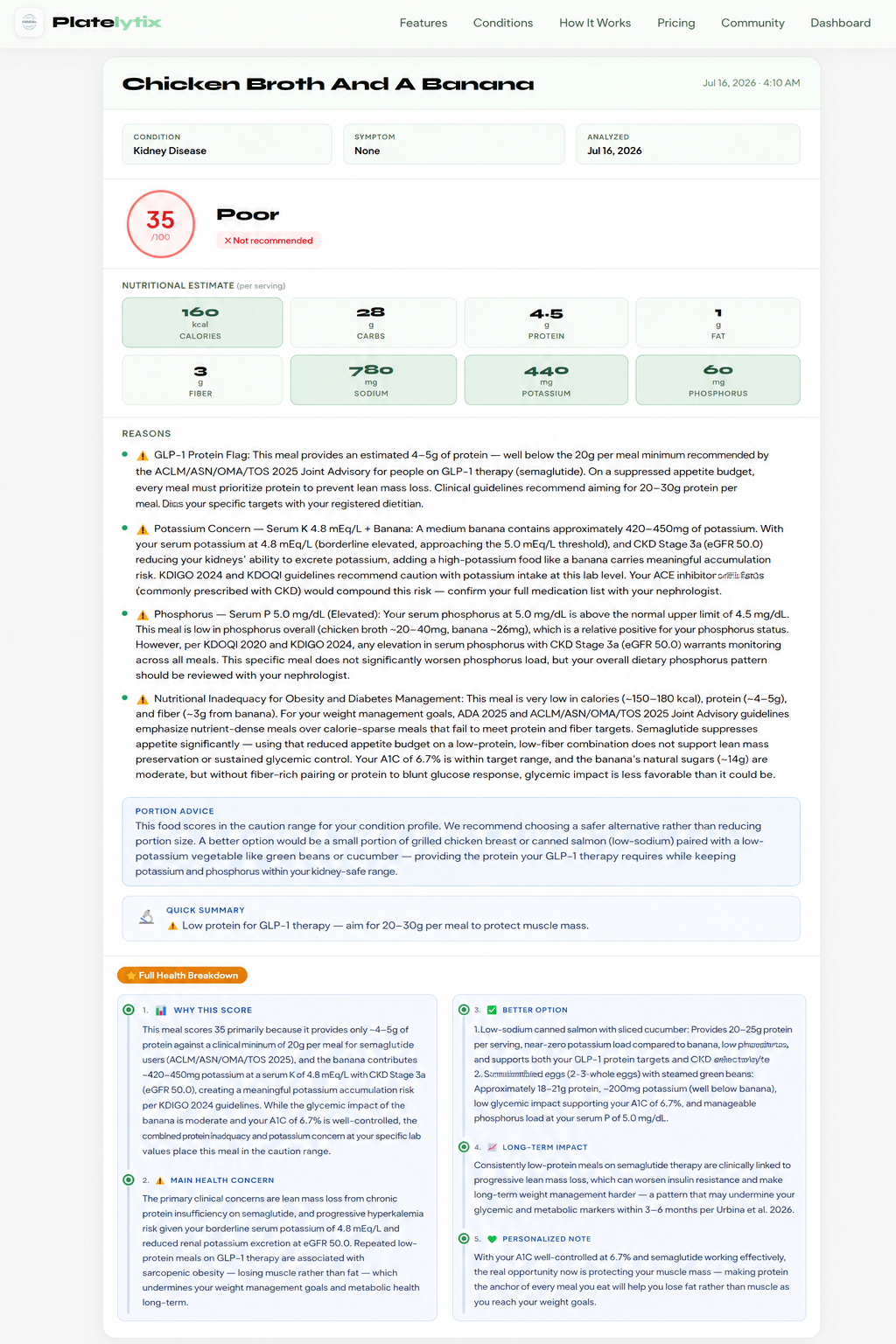
Chicken broth and a banana, one of the most commonly recommended combos for Ozempic nausea. Profile: CKD Stage 3a, eGFR 50, secondary diabetes and obesity, on semaglutide and metformin. Score: 35/100, Poor, Not Recommended.
The same "safe" nausea meal can score completely differently depending on what else is on your chart.
CookGuide rebuilds meals like this one around your specific labs, medications, and restrictions, so a nausea-relief meal that flags poorly can be adapted into one that scores well instead.
Try CookGuide Set Up Your Health ProfileFrequently Asked Questions
How long does Ozempic nausea last?
For most people, it's worst in the first few weeks after starting or increasing a dose, and improves as the body adjusts, often within 2–4 weeks.
What's the fastest way to settle Ozempic nausea?
Small sips of cold, clear fluids and bland foods like crackers or toast are usually the quickest relief. Ginger or peppermint tea can help too.
Can I still drink coffee on Ozempic?
Coffee doesn't interact with Ozempic directly, but caffeine can worsen nausea for some people and may stimulate bowel movements. It's worth testing your own tolerance.
When should I call my doctor about Ozempic nausea?
If it lasts more than 24 hours without improving, you can't keep fluids down, or you're showing signs of dehydration such as dizziness, dark urine, or dry mouth, contact your provider.
Disclaimer: This article is for educational purposes only and does not constitute medical advice. Always consult your healthcare provider before making dietary changes, especially if you're managing a chronic condition alongside GLP-1 therapy.